

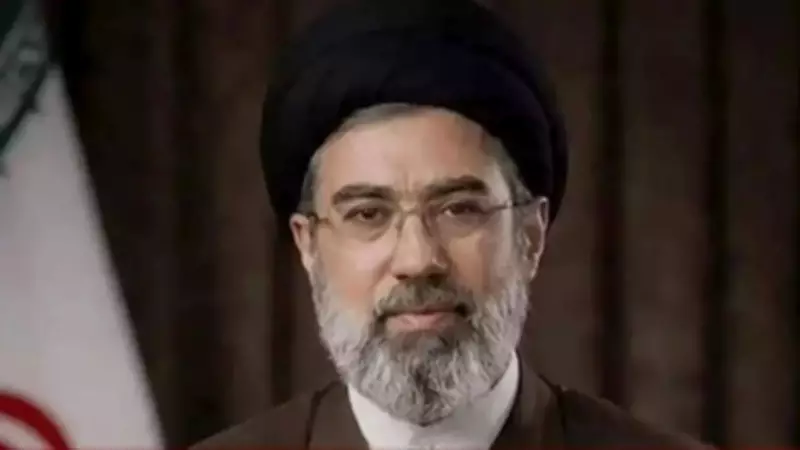
Mystery Deepens Over Iran's New Supreme Leader Mojtaba Khamenei Amid Global Intel Scrutiny
The enigma surrounding Iran's new Supreme Leader, Mojtaba Khamenei, is intensifying as global intelligence agencies, including the CIA and Mossad, closely track his whereabouts and role in Tehran's escalating conflicts. Since assuming power on March 9 following the assassination of his father, Ali Khamenei, Mojtaba has largely remained out of the public eye, with only a written Nowruz statement and a recently released video of him teaching religious studies to mark his presence.
Public Absence and Security Concerns
In his Nowruz message on Telegram, Mojtaba called for national unity and claimed Iran had defeated its enemies, stating: "At the moment, due to the particular unity that has been created between you, our compatriots—despite all the differences in religious, intellectual, cultural, and political origins—the enemy has been defeated. US and Israeli attacks were based on an illusion that by killing top leaders they could cause the overthrow of the government." He further described strikes in Turkey and Oman as part of a "scheme by the Zionist enemy" and emphasized Iran's regional alliances.
However, his avoidance of in-person or prerecorded appearances has raised significant red flags. The CIA is reportedly working to determine whether Mojtaba is alive, wounded, or fully exercising authority, especially after reports suggested he might have been injured in the strike that killed his father. Evidence, such as unsuccessful attempts by Iranian officials to schedule meetings with him, indicates he remains alive but under tight security.

Intelligence Assessments and Power Vacuum
A senior US official expressed uncertainty, saying, "We have no evidence that he is really the one giving orders. It's beyond weird. We don't think the Iranians would have chosen a dead guy as the supreme leader, but at the same time, we have no proof he is taking the helm." This concern is compounded by recent targeted strikes on Iran's senior leadership, including the assassination of security chief Ali Larijani.
US and Israeli officials highlight that the Islamic Revolutionary Guard Corps (IRGC) is now effectively managing the country, filling the power vacuum. CIA Director John Ratcliffe and Defense Intelligence Agency Director Gen James Adams testified before the House Intelligence Committee that Iran is experiencing a deep command and control crisis. Israeli officials also caution that Iran's top leaders are operating like fugitives, moving between safe houses and avoiding digital communications.
Analysis of Mojtaba's Condition and Public Expectations
Raz Zimmt, director of the Iran Program at Tel Aviv's Institute for National Security Studies, noted that Mojtaba may still be functioning, but injuries or security concerns could prevent public appearances or recorded messages. "Under the current exceptional circumstances, one should not expect him to appear in public, and it is possible that his injury does not even allow him to release a recorded video in order not to expose to the public the severity of his condition," Zimmt said.
During Nowruz celebrations, US and Israeli intelligence closely watched for signs of a public appearance. Instead, Mojtaba released a written message via Telegram along with a video showing him teaching religious studies. The CIA is analyzing these materials to determine their recency and gain insights into his current condition. A senior US official called Mojtaba's absence a "big red flag," adding, "We would have expected to see Mojtaba too in some form. He didn't take advantage of the opportunity and tradition."

Broader Implications and Regional Tensions
Mojtaba's continued silence leaves open questions about who is truly in command in Tehran. President Donald Trump's national security team has repeatedly raised concerns over leadership authority in the Iranian capital. Trump remarked, "Their leaders are all gone. The next set of leaders are all gone. And the next set of leaders are mostly gone. And now, nobody wants to be leader over there anymore. We are having a hard time. We want to talk to them but there is nobody to talk to. You know what, we like it that way." Israel has also indicated that regime change could be an objective of its ongoing operations, adding to the volatile regional dynamics.
As global tensions simmer, the mystery of Mojtaba Khamenei's status and authority remains a critical focal point for intelligence agencies and policymakers worldwide, shaping the future of Iran's governance and its role in international conflicts.





