Israeli Prime Minister Claims Decisive Blow to Iran's Military Infrastructure
Israeli Prime Minister Benjamin Netanyahu has made a bold declaration regarding the ongoing military campaign against Iran, stating that the Islamic Republic no longer possesses the capability to enrich uranium or manufacture ballistic missiles following extensive joint strikes with the United States.
Phase One Operations: Targeting Stockpiles and Nuclear Infrastructure
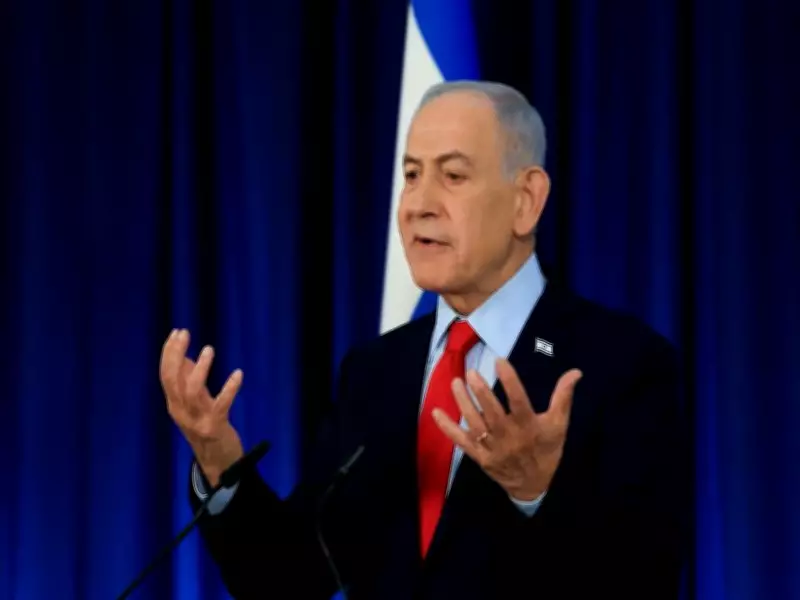
Netanyahu detailed that the initial phase of the military operation, codenamed "Rising Lion," successfully destroyed Iran's missile stockpiles and significantly degraded its drone and missile arsenal, including critical nuclear infrastructure. "We are winning and Iran is being decimated," Netanyahu told reporters in Jerusalem, emphasizing the scale of the damage inflicted.
The Israeli leader explained that hundreds of Iranian launchers have been destroyed, and stockpiles of missiles are being aggressively targeted. He highlighted that the current focus has shifted to dismantling the industrial base responsible for producing missile components. "What we are destroying now are the factories that produce the components that make these missiles. We are wiping out their entire industrial base that we didn't before," Netanyahu stated.

Global Protection and Political Ambiguity
Netanyahu framed the military campaign as a protective measure for global security, asserting that Israel and the United States are "protecting the entire world" through their actions. However, he did not provide concrete evidence to substantiate his claims about Iran's diminished capabilities, according to CNN reports.
When questioned about potential political outcomes in Iran, Netanyahu remained cautious, stating it was "too early to say" what might emerge. He stressed the importance of creating conditions for change within the country, drawing a stark historical comparison: "You want a transitional leader. You don't want to replace one Ayatollah with another, you don't want to replace Hitler with Himmler."
Netanyahu emphasized that any meaningful change must ultimately originate from the Iranian people themselves. "It's up to the Iranian people to... choose the moment and to rise to the moment. We can create the conditions, but they have to exploit those conditions," he said, while acknowledging that regime change cannot be achieved through air power alone, requiring a ground component as well.
Economic and Energy Security Initiatives
On the economic front, Netanyahu revealed that Israel is supporting US-led efforts to stabilize global energy markets by reopening key shipping routes, particularly the strategically vital Strait of Hormuz. "Americans are working very hard... to open the Strait of Hormuz. And if they succeed, which I think they will, then oil prices will come down," he predicted.
The Israeli Prime Minister also proposed long-term alternatives to reduce reliance on vulnerable maritime chokepoints, suggesting the development of oil and gas pipelines through the Arabian Peninsula to Israeli Mediterranean ports. "Instead of going through the choke points of the Strait of Hormuz... have oil pipelines, gas pipelines going West through the Arabian Peninsula right up to Israel, and our Mediterranean ports," he described, calling the idea "definitely possible."
Strategic Partnership with the United States
Netanyahu highlighted the close coordination with US President Donald Trump, particularly regarding countering Iran's nuclear ambitions. "I didn't have to convince President Trump about the need to prevent Iran from developing its nuclear program, putting it underground, and being able to launch nuclear-tipped missiles at the United States. He understood that. He explained it to me. I didn't explain it to him," Netanyahu said, adding, "Our partnership is the only way to avoid this catastrophic development."
Expressing optimism about the conflict's trajectory, Netanyahu concluded, "I also see this war ending a lot faster than people think." These remarks come amid heightened regional tensions, with ongoing military operations involving Israel, the United States, and Iran, alongside significant concerns about energy security and Tehran's future political landscape.