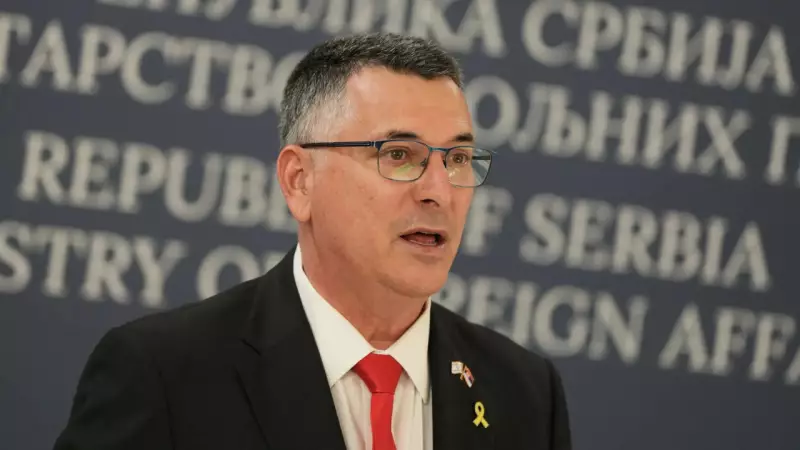
In a bold diplomatic move that has sent shockwaves across the Horn of Africa and the Middle East, Israel has signalled its firm intent to establish formal ties with the breakaway region of Somaliland. The high-profile visit of Israel's Foreign Minister, Gideon Saar, to Hargeisa on Tuesday has cemented a controversial new alliance, drawing fierce international backlash.
A Historic Visit and a Firm Commitment
Gideon Saar's trip to Somaliland's capital, Hargeisa, marks the first such visit by a top Israeli diplomat since Israel became the first and only country to formally recognise the territory as a sovereign state last month. During his stay, Saar was warmly received by senior officials and held a key meeting with President Abdirahman Abdullahi Mohamed, widely known as Irro, at the presidential palace.
Saar made a significant announcement, declaring that Israel would "soon" open an embassy in Somaliland. He framed the recognition as "the moral thing to do" and delivered a defiant message to critics. "We hear the attacks, the criticism, the condemnations," Saar stated. "Nobody will determine for Israel who we recognize and who we maintain diplomatic relations with."

Regional Outcry and Sovereignty Dispute
The move has plunged a decades-old political dispute back into the international spotlight. Somalia reacted with fury, labelling Saar's visit an "unauthorised incursion" and "an unacceptable interference" in its internal affairs. In a strongly-worded statement, Somalia's foreign ministry asserted it "reserves the right to take all appropriate diplomatic and legal measures… to safeguard its sovereignty, national unity, and territorial integrity."
The backlash extended far beyond Mogadishu. The African Union's Peace and Security Council swiftly called for the "immediate revocation" of Israel's recognition, reiterating that Somaliland "remains an integral part" of Somalia. Regional powers including Turkey and Egypt also voiced criticism, warning that the step could destabilise the region and embolden other separatist movements across Africa.
Security Concerns and Somaliland's Stance
Security was exceptionally tight during the Israeli minister's short stay, with reports of blocked roads and restricted civilian movement in Hargeisa. The threat was palpable; the Islamist militant group Al-Shabaab, which has battled the Somali government for years, issued a warning that it would resist any attempt by Israel to use Somaliland as a base. Unverified video footage circulating online appeared to show fighter jets patrolling the skies over the city.
Despite the controversy, Somaliland's leadership hailed Israel's decision as a game-changer. President Abdirahman praised it as "courageous," arguing it would unlock new economic and development partnerships. "It promotes the strategic interest partnership of the two countries," he said during a joint press conference. Somaliland's Information Ministry described the diplomatic engagement as a major milestone.
A De Facto State in a Diplomatic Limbo
Somaliland declared independence from Somalia in 1991 following a civil war and has since functioned as a stable, de facto state with its own government, currency, military, and democratic elections. However, its quest for international recognition had remained unfulfilled for over three decades, leaving it diplomatically isolated and economically impoverished.
Israel's unilateral recognition has dramatically altered this calculus, challenging the long-held positions of the African Union and the international community, which have consistently backed Somalia's territorial integrity. The development ensures that the complex status of Somaliland will remain a contentious and closely watched issue in global diplomacy for the foreseeable future.