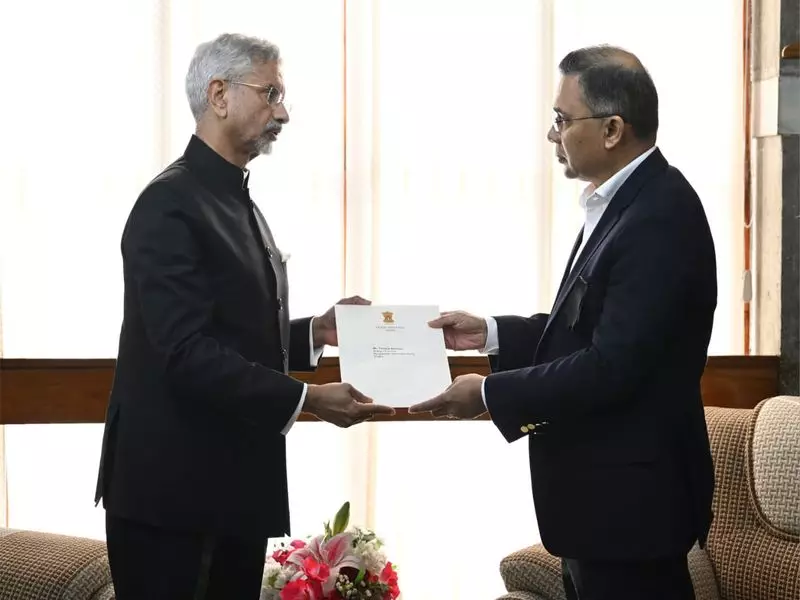
In a significant diplomatic engagement, India's External Affairs Minister, Dr. S. Jaishankar, held a meeting with the acting chairman of the Bangladesh Nationalist Party (BNP), Tarique Rahman, during his official visit to Dhaka. The high-profile interaction, which took place on Monday, saw Jaishankar personally hand over a letter from Prime Minister Narendra Modi to the BNP leader.
A Diplomatic Handover and Shared Vision
The central act of the meeting was the conveyance of Prime Minister Narendra Modi's personal letter to Tarique Rahman. While the specific contents of the letter were not publicly disclosed, the Indian Ministry of External Affairs stated that it pertained to the "vision and values guiding the partnership" between India and Bangladesh. This gesture is seen as a reaffirmation of India's intent to maintain and strengthen ties with its important neighbour, engaging with key political figures across the spectrum.
During their conversation, Minister Jaishankar and Tarique Rahman discussed the enduring ties between India and Bangladesh. Jaishankar emphasized the foundational principles that guide the bilateral relationship, rooted in shared history, geographical proximity, and cultural affinity. The discussions reportedly covered the broad trajectory of the partnership and mutual interests.

Engagement with Bangladesh's Political Landscape
This meeting marks a notable moment in India's diplomatic outreach within Bangladesh. Tarique Rahman, the senior vice-chairman of the BNP, is a prominent political figure, though he has lived in London for several years. The engagement underscores India's policy of maintaining channels of communication with major political parties in Bangladesh, a crucial partner in South Asia.
The interaction follows Jaishankar's official meetings with Bangladesh's top leadership, including Prime Minister Sheikh Hasina. His visit is part of ongoing high-level exchanges that characterize the robust bilateral relationship. The delivery of PM Modi's letter to the opposition leader signals a comprehensive approach to diplomacy, aiming to foster stable and long-term relations that transcend immediate political cycles.
Implications for Bilateral Ties
Analysts view this move as a strategic effort to ensure continuity in the India-Bangladesh partnership. By engaging with the principal opposition party, India aims to build a broader consensus on bilateral issues, which include vital matters like cross-border connectivity, security cooperation, trade, and water-sharing agreements. A relationship that enjoys support across political lines is often more resilient and forward-looking.
The Indian government's statement highlighted that the partnership is driven by a mutual commitment to welfare, progress, and regional stability. The meeting with Tarique Rahman, therefore, fits into the larger framework of India's 'Neighbourhood First' policy, which prioritizes peaceful relations and collaborative development with immediate neighbours.
As both nations navigate a complex regional environment, such diplomatic gestures are pivotal. They reinforce the message that India values its relationship with the people of Bangladesh as a whole and is committed to working with all stakeholders to realize the full potential of a partnership that impacts the lives of millions.