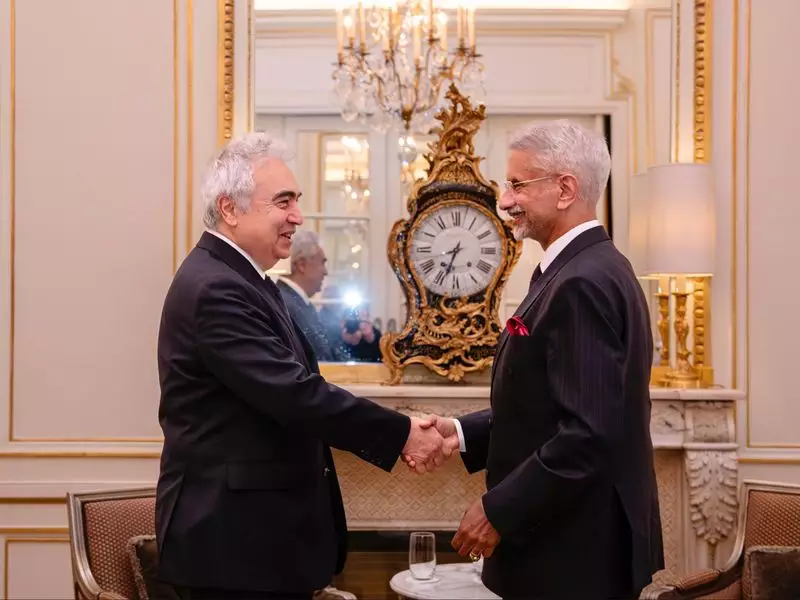
India's External Affairs Minister, Dr. S. Jaishankar, held a significant meeting with the head of a leading global energy body in Paris, focusing on the world's energy landscape and India's own developmental goals. The high-level discussion underscores India's active role in shaping international energy dialogues.
Key Discussions on Global Energy and India's Trajectory
The meeting took place between Dr. S. Jaishankar and Fatih Birol, the Executive Director of the International Energy Agency (IEA). Their conversation, described as an "excellent meeting" by Jaishankar, centered on two primary themes: the current global energy scenario and India's specific growth priorities. This dialogue is timely, given the ongoing volatility in energy markets and the pressing need for a sustainable transition worldwide.
Minister Jaishankar utilized the platform to articulate India's perspective and its requirements as one of the world's fastest-growing major economies. The talks likely covered how global energy trends impact India's security and economic plans, and how India's scale and approach can contribute to global energy stability.

Strengthening India-IEA Collaboration
This engagement in Paris is not an isolated event but part of ongoing cooperation between India and the IEA. India, while not a formal member of the IEA, is a key strategic partner. The country's massive energy demand and its ambitious renewable energy targets make it a critical player in global energy forums.
The discussions with Dr. Birol are expected to further solidify this partnership. They pave the way for deeper collaboration on areas like energy security, data sharing, and clean energy technology. For India, aligning with the IEA's expertise is crucial for managing its energy needs while navigating the complex shift towards greener fuels.
Implications for India's Energy Future
The outcomes of this meeting hold substantial importance for India's domestic policy and international stance. By directly engaging with the IEA leadership, Jaishankar ensures that India's growth narrative is central to global energy planning. The dialogue reinforces India's commitment to a balanced energy transition—one that supports economic development while progressively adopting sustainable practices.
Such high-level diplomacy is essential for securing technology transfers, investments, and cooperative frameworks that can help India achieve its target of 500 GW of renewable energy capacity by 2030. It also positions India as a responsible and influential voice in critical global discussions on climate change and resource management.
In conclusion, the Paris meeting between External Affairs Minister S. Jaishankar and IEA chief Fatih Birol was a strategic diplomatic engagement. It successfully highlighted India's growth priorities on the world stage and strengthened a vital partnership for navigating the future of energy.