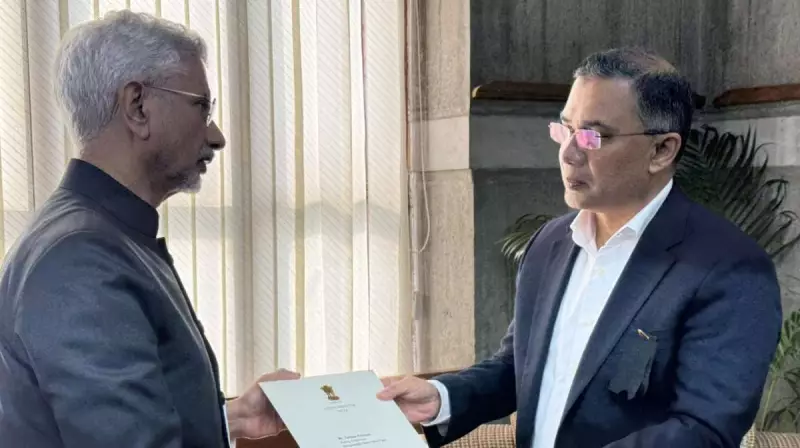
In a significant diplomatic engagement, India's External Affairs Minister, Dr. S. Jaishankar, held a meeting with Tarique Rahman, the acting chairman of the Bangladesh Nationalist Party (BNP), during his official visit to Dhaka. The high-level interaction took place on Tuesday, December 31, 2024.
A Gesture of Condolence and Solidarity
The central purpose of the meeting was for Minister Jaishankar to personally hand over a condolence letter from Prime Minister Narendra Modi. The letter was addressed to Tarique Rahman following the passing of his mother, former Bangladesh Prime Minister Begum Khaleda Zia, who died on December 30, 2024. This gesture was seen as a formal and respectful acknowledgment of the loss suffered by the Rahman family and a message of solidarity from the Indian leadership.
Official sources confirmed that the meeting was conducted in a cordial and warm atmosphere. The discussions between the Indian Foreign Minister and the BNP leader are understood to have covered a range of bilateral topics. While the primary focus was the delivery of the condolence message, the dialogue also provided an opportunity to discuss the broader India-Bangladesh relationship and matters of mutual interest.

Context and Diplomatic Significance
This engagement holds considerable diplomatic weight. Tarique Rahman, who lives in exile in London, is a central figure in Bangladeshi opposition politics. The meeting signifies India's continued policy of engaging with all major political stakeholders in Bangladesh, a key neighbor and strategic partner. Dr. Jaishankar's outreach during a period of mourning for the opposition leader's family is viewed as a nuanced diplomatic move, reinforcing people-to-people connections beyond government-to-government ties.
The visit and the specific meeting underscore the multi-faceted nature of the India-Bangladesh partnership. It highlights India's commitment to maintaining strong ties with Bangladesh, which are built on shared history, cultural affinity, and growing economic and security cooperation. The act of delivering a personal letter from the Indian Prime Minister adds a layer of high-level personal diplomacy to the ongoing official interactions.
Broader Implications for Bilateral Ties
Analysts suggest that such interactions contribute to a stable and predictable bilateral environment. By engaging with the principal opposition party, India demonstrates its long-term interest in the political landscape of Bangladesh as a whole. The condolences extended to the family of Khaleda Zia, a former prime minister with a significant political legacy, are also a recognition of her role in the nation's history.
The meeting between EAM Jaishankar and Tarique Rahman is likely to be noted as a notable event in the diplomatic calendar of 2024. It successfully combined a humanitarian gesture with strategic dialogue, reflecting the mature and complex dynamics of regional diplomacy. As both nations continue to collaborate on issues like connectivity, trade, and regional security, maintaining open channels with all political entities remains a cornerstone of India's foreign policy approach towards its eastern neighbor.
In conclusion, the delivery of PM Modi's letter through Foreign Minister Jaishankar was more than a protocol exercise; it was a carefully considered diplomatic signal of empathy and sustained engagement, reinforcing the deep-rooted ties between India and Bangladesh across the political spectrum.