External Affairs Minister Dr. S. Jaishankar delivered a sharp rebuke to Pakistan, stating unequivocally that India cannot be expected to engage in water-sharing discussions with a neighbour that actively supports and spreads terrorism on Indian soil. His comments highlight the direct link between Pakistan's actions and bilateral cooperation on vital issues like water resources.
Linking Terrorism to Resource Cooperation
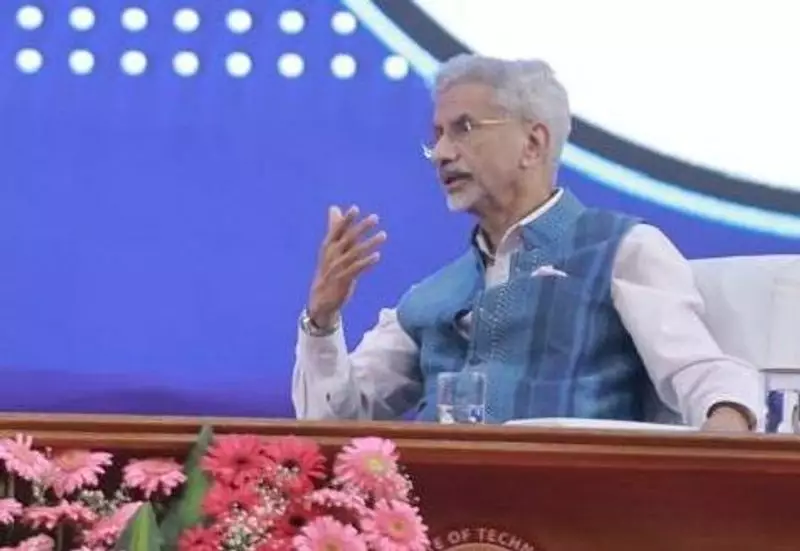
Speaking at an event, Jaishankar addressed the complex dynamics with India's western neighbour. He pointed out the inherent contradiction in Pakistan's stance. "You cannot have a situation where you are spreading terrorism in another country and then asking that country to give you water. It doesn't work that way," the Minister asserted. His statement underscores a core principle of India's contemporary foreign policy: reciprocity and good neighbourly conduct are prerequisites for cooperation on shared resources.
The Minister's remarks come against the backdrop of the Indus Waters Treaty (IWT) of 1960, a long-standing agreement brokered by the World Bank that governs the sharing of the waters of the Indus river system between the two nations. While India has consistently upheld its treaty obligations, Jaishankar's comments signal that Pakistan's continued use of terrorism as a state policy casts a long shadow over all aspects of the bilateral relationship, including critical resource sharing.

A Firm Stance on National Security
Jaishankar elaborated that India's position is not merely about water but about establishing a fundamental norm in international relations. He framed the issue as one of basic logic and justice. "The relationship between terrorism and water is that you cannot be a terrorist haven and then expect your neighbour to be in a normal relationship with you," he explained. This draws a clear line, indicating that Pakistan's actions in harbouring and supporting terror groups targeting India have tangible consequences beyond the security domain, affecting diplomatic and resource-related engagements.
The External Affairs Minister's language was direct and unambiguously tied Pakistan's behaviour to the state of the overall relationship. His statement reinforces the Modi government's persistent stance that talks and terror cannot coexist. By explicitly linking the issue of water sharing to cross-border terrorism, India is raising the cost for Pakistan's continued patronage of militant groups.
Broader Implications for Bilateral Ties
This firm posture has significant implications for the future of India-Pakistan relations. Jaishankar's comments suggest that as long as terrorism emanating from Pakistani soil remains a clear and present threat, the scope for meaningful dialogue or cooperation on other fronts, however historically governed by treaties, will remain severely limited. It places the onus squarely on Pakistan to create a conducive environment by taking verifiable and irreversible action against terror infrastructure on its territory.
The Minister's unequivocal message serves multiple purposes: it communicates India's resolve to a domestic audience, sets clear terms of engagement for the international community observing the region, and delivers a stark reminder to Islamabad about the repercussions of its choices. The ball, as per New Delhi's clear articulation, is now in Pakistan's court to decide whether it values constructive engagement over the perpetuation of conflict through terrorism.