Jaishankar Addresses Iranian Warship Sinking, Details India's Humanitarian Port Access
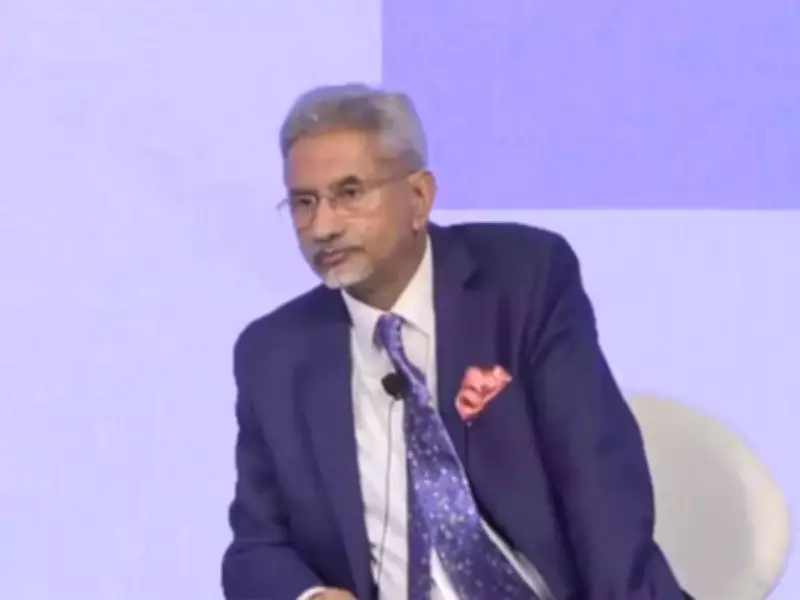
In his first public remarks on the sinking of the Iranian warship IRIS Dena by the United States Navy in the Indian Ocean, External Affairs Minister S Jaishankar provided a detailed account of India's response during the Raisina Dialogue 2026 in New Delhi. He clarified that one Iranian vessel received permission to dock in India due to reported difficulties, while another became entangled in escalating regional tensions near Sri Lanka.
Humanitarian Decision Guided India's Actions
Jaishankar emphasized that India's decision was rooted in humanitarian principles and adherence to international law. "I too support UNCLOS (UN Convention on the Law of the Sea) and international law," he stated, explaining that Iran requested port access for a ship experiencing problems near Indian borders.
"On the 1st March, we said you can come in and it took them a few days to sail in and then they docked in Kochi... There were a lot of young cadets and they disembarked," Jaishankar revealed, highlighting the safe disembarkation of personnel from the distressed vessel.

Changing Circumstances Caught Ships in Conflict
The minister elaborated that three Iranian frigates had initially participated in the MILAN-2026 naval exercise hosted by India in Visakhapatnam last month. However, the geopolitical landscape shifted dramatically during their return journey.
"When they set out and came here the situation was totally different. They were coming in for a fleet review and then they got caught on the wrong side of events," Jaishankar explained, noting that while one ship found refuge in India and another in Sri Lanka, the IRIS Dena tragically "didn't make it."
US Navy Strike and Regional Fallout
The IRIS Dena was struck by a torpedo fired from a US Navy submarine in international waters on Wednesday, during what US Secretary of War Pete Hegseth described as a "quiet death" operation. This attack occurred under Operation Epic Fury, a joint US-Israel campaign against Iran that began on February 28, with Israel calling its component Operation Roaring Lion.
The sinking resulted in more than 80 sailor fatalities, while 32 crew members were rescued by the Sri Lanka Navy. The incident has drawn criticism from Indian opposition parties, who questioned the government's stance given that the vessel was returning from India when attacked in the Indian Ocean.
Jaishankar Defends Regional Reality
Addressing the controversy, Jaishankar pointed to the long-standing presence of foreign militaries in the Indian Ocean region. "Please understand the reality of the Indian Ocean. Diego Garcia has been in the Indian Ocean for the last five decades," he stated, referencing the joint US-UK military base in the Chagos Archipelago.
He further noted that foreign forces have been based in Djibouti since the early 2000s, and the Hambantota Port in Sri Lanka emerged during this period. These remarks aimed to contextualize the complex security environment surrounding the incident.
Broader Implications and Ongoing Tensions
The minister's comments come amid heightened tensions between Iran, the United States, and Israel, with the Indian Ocean becoming a focal point of military activity. Jaishankar's explanation seeks to balance India's humanitarian commitments with the realities of regional power dynamics, while defending the government's decision-making process against political criticism.
This incident underscores the delicate diplomatic navigation required as global conflicts spill into strategically vital waterways, with India positioning itself as a responsible maritime actor guided by international law and compassionate principles.