

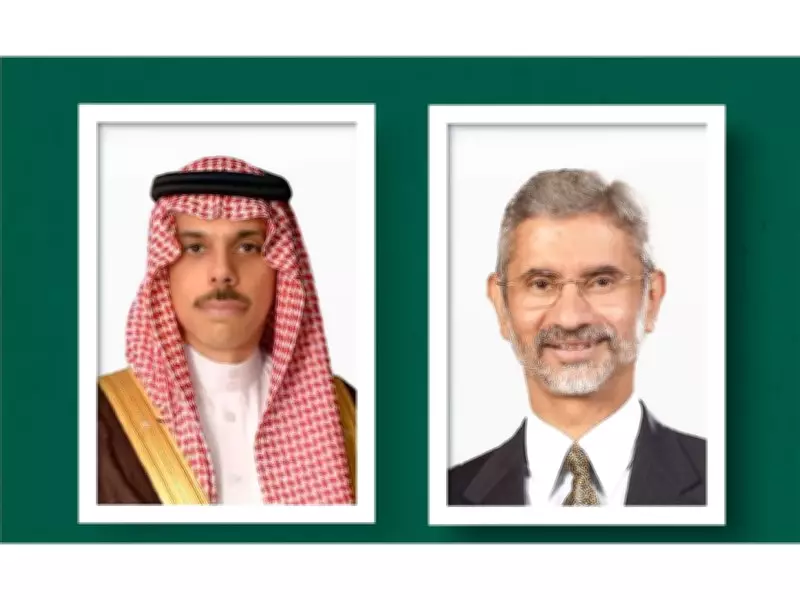
EAM Jaishankar Engages in High-Level Talks on West Asia Developments
External Affairs Minister Dr. S Jaishankar conducted a series of crucial telephonic conversations with key regional leaders on Sunday, addressing the volatile situation in West Asia. In a significant diplomatic outreach, he spoke with Saudi Arabia's Foreign Minister, Prince Faisal bin Farhan, and the UAE's Deputy Prime Minister and Foreign Minister, Abdullah Bin Zayed.
Discussions with Saudi Arabia and the UAE
During the call with Prince Faisal bin Farhan, the two ministers delved into the ongoing developments related to the conflict in West Asia. The Saudi Foreign Ministry confirmed the exchange in an official statement, noting that they discussed regional developments and the efforts being made to address them. Similarly, in his conversation with Abdullah Bin Zayed, Jaishankar exchanged views on various aspects of the regional situation, highlighting India's active role in monitoring and engaging with the escalating tensions.
Escalating Security Threats in the Region
The diplomatic talks come against a backdrop of heightened security threats across West Asia. Saudi Arabia's Ministry of Defence reported intercepting and destroying at least 10 drones on Sunday, with four neutralised in the Riyadh metropolitan area and others in eastern regions. This follows a pattern of persistent aerial attacks since late February, when joint US-Israeli military operations against Iran commenced. These incidents have resulted in casualties, including at least two deaths and 12 injuries, as reported by Al Jazeera.

Kuwait and Italy Face Drone Attacks
In a related development, Kuwait International Airport was targeted by three drones, causing damage to its radar system. Kuwait's armed forces successfully destroyed five additional drones. Additionally, a drone strike hit the Ali Al Salem base in Kuwait, which hosts American and Italian military personnel. Italian Chief of Defence General Staff Luciano Portolano confirmed the attack, noting that it destroyed a remotely piloted aircraft but caused no injuries. This incident follows a previous drone attack on an Italian military site in Erbil, Iraq, prompting Italy to withdraw approximately 300 troops.
Iran's Stance and Regional Tensions
Iran's Foreign Minister, Seyyed Abbas Araghchi, reiterated in interviews that Iran is ready to form an investigative committee with regional countries to probe airstrikes, asserting that their attacks only target US bases and interests. He emphasised that Iran is not in a war of survival, describing the regime as stable and strong. Meanwhile, Secretary of Iran's Supreme National Security Council, Ali Larijani, stated that Iran has no war with the American people, dismissing conspiracy theories about blaming Iran for terrorist schemes.
Broader Implications and Diplomatic Efforts
The series of drone attacks and diplomatic exchanges underscore the fragile security environment in West Asia. India's engagement through Jaishankar's talks reflects its strategic interest in regional stability, given its economic and energy ties with Gulf nations. The ongoing conflicts pose risks to international security and highlight the need for coordinated efforts to de-escalate tensions. As developments unfold, the international community watches closely, with India playing a pivotal role in fostering dialogue and understanding among affected parties.






