

From Protest to Progress: The Contrasting Tales of Land Acquisition in Gautam Budh Nagar
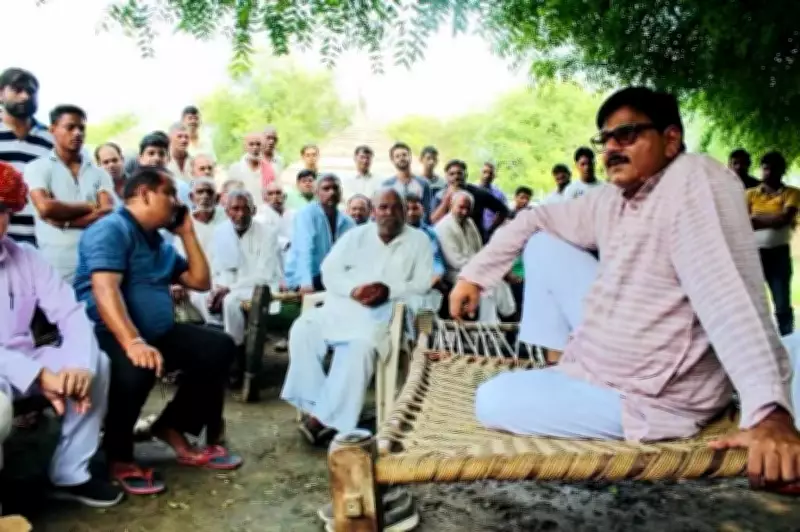
NOIDA: Situated merely 20 kilometers from the upcoming Noida International Airport, the villages of Bhatta and Parsaul serve as a stark reminder of a turbulent past. In May 2011, under the BSP regime, these villages in Gautam Budh Nagar district erupted into violent protests over land acquisition for industrial and infrastructure projects. Farmers resisted fiercely, citing inadequate compensation and coercive tactics, leading to clashes with police that resulted in four fatalities and 66 injuries.
This unrest sparked a prolonged legal battle, culminating in the Allahabad High Court and Supreme Court mandating an additional 64.7% compensation for the affected farmers. Given this history, when the government embarked on acquiring nearly 5,000 hectares for a greenfield airport project in Jewar, apprehensions loomed large. However, the Jewar experience unfolded as a markedly different narrative.
Political Outreach and Caste Dynamics Pave the Way
Saurabh Sharma, a resident of Banwaripur village whose family relinquished 10 acres for the airport project in 2019, highlighted key factors. "There are reasons why people in Jewar gave land while people in Bhatta-Parsaul did not," he explained. "Right now, BJP is in office and their functionaries have a strong hold on the area. They are well connected with locals. The second reason is caste — most people in the Jewar area are Thakur and Brahmin, forming the core voter group for BJP. In addition to this, locals believed the airport will bring development to the area, so they agreed to part with land."

Jewar BJP MLA Dhirendra Singh played a pivotal role in the initial stages, persuading farmers by emphasizing job creation and regional development. "In the assembly, after the 2017 election, I proposed that if an international airport is developed in Jewar, it will bring development and job creation in the area," he stated, noting BJP's pre-poll promise of generating 10 lakh jobs.
Overcoming Historical Baggage and Ensuring Fair Compensation
Initially, the state government considered an airport near Agra for its tourist appeal, but Jewar's proposal gained traction. Singh recalled discussing the plan with Chief Minister Yogi Adityanath, who pointed out Jewar's proximity to Bhatta-Parsaul. "The chief minister pointed out that Jewar is close to Bhatta-Parsaul, which had seen violence during the 2011 land acquisition agitation," Singh said, assuring the CM of his efforts to convince farmers.
After the Ministry of Civil Aviation granted site clearance on July 6, 2017, the state government began securing no-objection certificates. By 2018, fears of farmer resistance prompted a major outreach campaign. Singh camped in villages like Rohi, Parohi, and Kishorpur, addressing concerns about homes, religious structures, rehabilitation, and compensation. "We explained the rehabilitation and resettlement policy in detail, and gradually they agreed to give consent," he added.
The administration achieved 72% consent by September 2018, surpassing the 70% minimum requirement, and later reached 95%. Declaring the area urban made landowners eligible for double the enhanced compensation. With a circle rate of Rs 900 per square metre, compensation started at Rs 1,800 per sqm and was raised to Rs 2,100 per sqm after the CM's intervention.
Learning from Past Mistakes and Building Community Support
Former district magistrate BN Singh, who oversaw the first phase, acknowledged the sensitivity given Bhatta-Parsaul's history, which had led to stricter land laws. He engaged with farmers in Kishorpur and Roh, sharing government updates. "All stakeholders, particularly farmers, supported the project," he said, stressing the importance of addressing concerns sincerely and avoiding legal contradictions.

Ibrahim from Nangla Sharif Khan village, whose joint family gave nearly 70 acres, noted, "Some of these lands were barren and yielded no results. Govt was also giving good compensation, so we agreed." The project saw cross-community support, with 1,334 hectares acquired in the first phase and 1,365 hectares in the second, while 2,053 hectares are planned for the third and fourth phases. Compensation rates increased from Rs 2,100 per sqm in phase one to Rs 3,100 in phase two, and revised to Rs 4,300 per sqm for remaining phases.
This successful acquisition underscores how transparent policies, political engagement, and fair treatment can transform potential conflict into collaborative progress, setting a new benchmark for infrastructure development in India.





