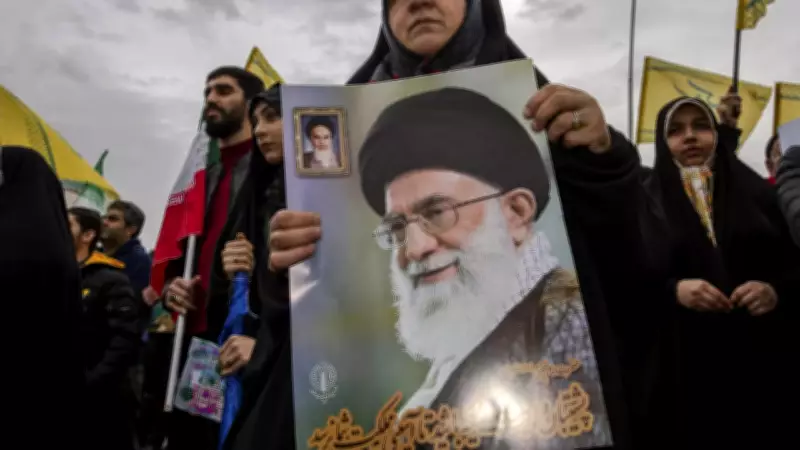
Trump Announces Death of Iran's Supreme Leader Following Joint US-Israel Military Strikes
In a dramatic development that has sent shockwaves across the Middle East, former US President Donald Trump announced on Saturday that Iran's Supreme Leader Ayatollah Ali Khamenei has been killed. The announcement came following what Trump described as coordinated American and Israeli air strikes targeting Iranian leadership.
"Khamenei, one of the most evil people in history, is dead," Trump declared in his statement, characterizing the military action as "justice for the people of Iran" and for Americans and others allegedly harmed by Iranian activities over the years.
Iran Plunged Into Leadership Crisis
The death of the 86-year-old supreme leader has plunged Iran into unprecedented uncertainty. Khamenei, who had ruled Iran since 1989, left the political stage without naming any designated successor, creating a power vacuum at the highest levels of the Islamic Republic.

According to Iranian state television reports on Sunday, a transitional leadership council has been established to govern during this critical period. The council will be led by three officials:
- President Masoud Pezeshkian
- Judiciary chief Gholamhossein Mohseni Ejei
- Another official from the country's legal council
The formation of this temporary governing body was confirmed by Mohammad Mokhber, one of Khamenei's senior advisors, who cited constitutional provisions for such transitional arrangements.
Constitutional Succession Process in Iran
The Iranian constitution provides a specific framework for supreme leader succession that now faces its second test in the nation's history. According to Iranian law:
- An 88-member panel of Shia clerics called the Assembly of Experts is responsible for appointing the supreme leader
- These clerics are popularly elected every eight years, with their candidacies approved by the Guardian Council
- The assembly must select a new supreme leader "as soon as possible" following a vacancy
- Until a permanent successor is chosen, a leadership council assumes all duties of leadership
This leadership council comprises Iran's sitting president, the head of the judiciary, and a member of the Guardian Council selected by Iran's Expediency Council. If implemented now, this would place reformist President Masoud Pezeshkian and hard-line judiciary chief Gholamhossein Mohseni Ejei on the temporary governing body.
Historical Context and Regional Implications
This transition marks only the second transfer of power in the office of supreme leader since Iran's 1979 Islamic Revolution. The previous transition occurred in 1989 when Grand Ayatollah Ruhollah Khomeini died at age 86 after leading Iran through its eight-year war with Iraq.
The current crisis comes amid heightened regional tensions, following Israel's 12-day military campaign against Iran in June 2025. The joint US-Israel strikes that reportedly killed Khamenei represent a significant escalation in the ongoing conflict between Iran and its adversaries.
Potential Successors and Political Contenders
With the supreme leader position now vacant, several figures have emerged as potential successors:
Mojtaba Khamenei: The 56-year-old son of the late supreme leader represents continuity with his father's hardline policies. According to Reuters sources, he has long been seen as a rational successor within the regime. The US Treasury Department recently accused him of facilitating the transfer of $1.5 billion out of Iran last month.
Hassan Khomeini: The 53-year-old grandson of revolutionary founder Ruhollah Khomeini has emerged as a more conciliatory choice both domestically and internationally. His lineage gives him significant religious and political credibility within the system.
Opposition Figures: External opposition leaders have also positioned themselves amid the crisis. Maryam Rajavi, president-elect of the Paris-based National Council of Resistance of Iran, called for the regime's overthrow and establishment of a democratic republic. Reza Pahlavi, son of Iran's last monarch, described the US action as humanitarian intervention and called for democratic transition.

International Reactions and Calls for Change
Both Trump and Israeli Prime Minister Benjamin Netanyahu have encouraged the Iranian people to seize this moment for political change. Netanyahu stated that "our joint action will create the conditions for the brave Iranian people to take their destiny into their own hands," while Trump framed the strikes as delivering justice to the Iranian people.
Opposition figures have presented detailed plans for Iran's future. Rajavi outlined a "10-point plan" advocating for free elections, separation of religion and state, gender equality, and a non-nuclear Iran. Pahlavi called on security forces to abandon the regime and protect civilians during this transitional period.
The death of Ayatollah Khamenei represents a watershed moment in Middle Eastern politics, with implications that will reverberate across the region for years to come. As Iran navigates this unprecedented leadership transition, the world watches closely to see how power dynamics will shift both within the Islamic Republic and in its relations with global powers.