

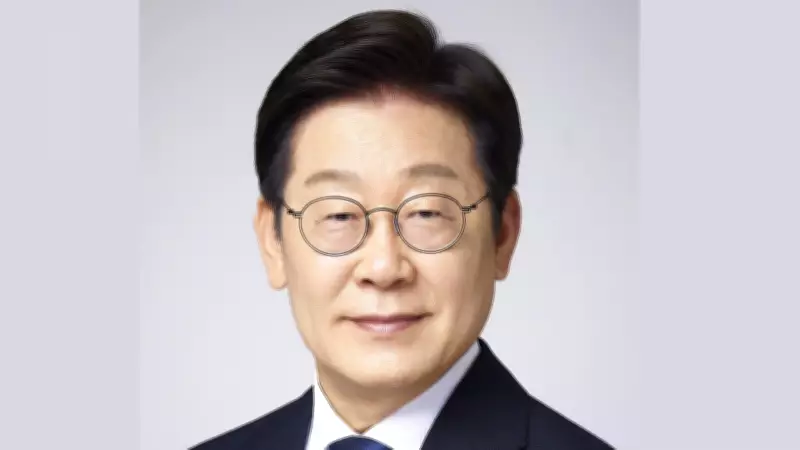
Korean President Champions Atmanirbhar Bharat During State Visit to India
South Korean President Lee Jae Myung, upon his arrival in India for a state visit, has strongly endorsed India's Atmanirbhar Bharat initiative, highlighting the need for close collaboration between the two nations as emerging global leaders. In an exclusive interview, President Lee emphasized that Korea and India must work together to navigate heightened geopolitical uncertainties and redefine multilateralism in the face of mounting challenges.
Strengthening Strategic Partnership in Trade and Technology
President Lee described India as an ideal partner for Korea, citing its status as the world's most populous country, the fourth-largest economy, and a leading voice of the Global South. He noted that the partnership is built on highly complementary economies and shared core values of democracy and a market economy. A key priority is accelerating negotiations to upgrade the Comprehensive Economic Partnership Agreement (CEPA), with plans to expand cooperation beyond traditional sectors like electronics and automobiles into shipbuilding, finance, and the defense industry.
"We will bring to life the vision of 'Make in India, Together with Korea,'" President Lee stated, underscoring the commitment to mutual growth and innovation. He also highlighted the synergy between Korea's world-class AI infrastructure and India's vast pool of AI talent, aiming to identify projects that generate meaningful outcomes in digital technologies.

Defense Collaboration and Support for Atmanirbhar Bharat
In the defense sector, President Lee affirmed Korea's full support for India's Atmanirbhar Bharat initiative, expressing confidence in its realization under Prime Minister Narendra Modi's leadership. He referenced the successful K9 Vajra howitzer project as an exemplary case of bilateral defense cooperation, with over 60% of the manufacturing process carried out in India under the second phase contract signed in April last year.
"Korea will continue to provide full support for India's independent production and operation of defense equipment," President Lee declared. He added that both countries will explore avenues for joint technology development, coproduction, and operations and maintenance to advance their defense industry ecosystems together.
Addressing Critical Minerals and Maritime Security
On the issue of critical minerals, President Lee stressed the importance of reducing excessive dependence on any single country, linking it directly to the economic security of both India and South Korea. He pointed out that India possesses critical minerals, while Korea has the capabilities to manufacture them into advanced products like rechargeable batteries and electric vehicles.
"By combining Korea's technology with India's mining and refining industries, we can establish stable critical-mineral supply chains," he explained. Regarding maritime security, President Lee emphasized the necessity of ensuring safe passage through the Strait of Hormuz, given both nations' reliance on Middle Eastern energy supplies. He committed to maintaining close communication with India to uphold freedom of navigation in this key energy waterway.
Enhancing Cooperation in Shipbuilding and Indo-Pacific Stability
President Lee highlighted the boundless potential for bilateral cooperation in shipping and shipbuilding, noting that Korea's world-class expertise positions it as India's foremost partner in these areas. He expressed optimism about upcoming MOUs expected to be signed during his visit, envisioning vessels jointly built by the two countries sailing across global oceans.
In the context of the Indo-Pacific, President Lee acknowledged the region's strategic interconnectedness and the need for regional countries to lead in strengthening multilateralism. "Korea will work closely with regional partners, including India, to foster deeper cooperation and anchor a more resilient regional order," he stated, mentioning participation in India-led initiatives like the Indo-Pacific Oceans Initiative.

Managing Trade Relations and Upholding Multilateralism
When asked about trade relations with the United States, President Lee advised New Delhi to pursue creative and pragmatic solutions, similar to Korea's successful trade agreement with the US. He emphasized the importance of both India and South Korea working together to keep the global trade framework multilateral, rules-based, and inclusive, especially amid rising protectionism and supply chain reconfigurations.
President Lee concluded by expressing his confidence that this visit would mark a significant milestone in strengthening the friendship and trust between Korea and India, paving the way for enhanced collaboration across multiple sectors.





