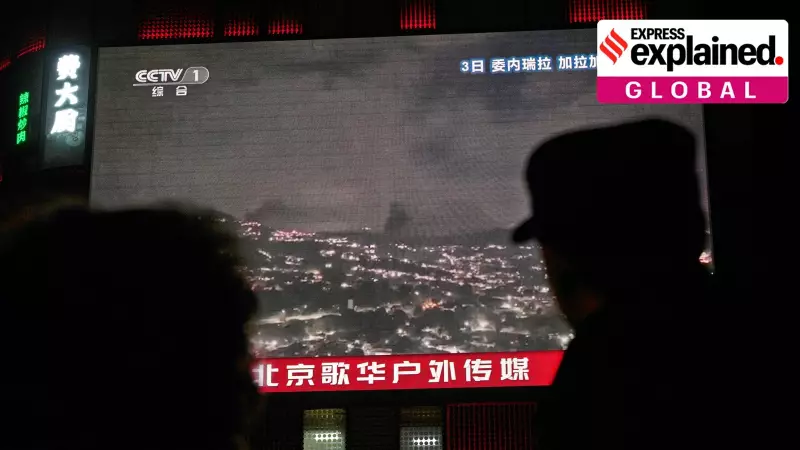
The dramatic capture of Venezuelan President Nicolas Maduro by United States forces has sent geopolitical shockwaves far beyond Latin America, striking at the heart of China's carefully cultivated economic and strategic interests in the region. The late-night raid in Caracas on January 3 has placed Beijing in a precarious position, threatening billions in investments and forcing a recalculation of its global expansion strategy, particularly regarding Taiwan.
China's High-Stakes Bet in Venezuela
For over a decade, China has positioned itself as Venezuela's most dependable external partner, a relationship forged during the Hugo Chavez era and steadfastly continued under Nicolas Maduro. This alliance transformed from a simple oil-for-loans arrangement into a deep, multifaceted partnership. China is Venezuela's largest external economic partner, with trade heavily skewed towards Venezuelan crude oil. In return, China exports machinery, electronics, and consumer goods, often through complex "loans-for-oil" deals.
Data from Trading Economics indicates China exported goods worth $4.8 billion to Venezuela in 2024. The relationship diversified to include Venezuelan gold, rare earths, and other critical minerals, morphing into a significant political alliance that extended Beijing's influence into America's traditional backyard.
Now, this entire framework is in jeopardy. With Maduro's removal, managing oil shipments—which often travel via tankers from third countries like Malaysia or Panama to circumvent US sanctions—becomes highly problematic. More critically, Venezuela owes China an estimated $19 billion for goods delivered under oil-for-cash agreements, money Beijing is now unlikely to recover easily. Reports from Bloomberg confirm that Chinese authorities have urgently asked major lenders to assess their exposure to Venezuela following Maduro's capture.
The Ripple Effect: From Latin America to the Belt and Road
The US action is seen by analysts and Chinese academics as a stark reassertion of a Trump-style Monroe Doctrine, aimed squarely at countering China's growing footprint in the Americas. Over the last decade, China's investments in strategic minerals, energy, and port infrastructure across Central and South America have grown markedly.
The message from the Venezuela operation is unambiguous: the US is willing to act unilaterally and decisively to protect its hemispheric interests. This has immediate repercussions. Chinese companies operating across Latin America are reportedly bracing for greater uncertainty and potential backlash. The episode casts a long shadow over China's flagship Belt-and-Road Initiative (BRI), raising uncomfortable questions for partner nations about the long-term security of Chinese investments and loans in regions where US interests are paramount.
This pattern of pushback was foreshadowed by the Trump administration's earlier moves against China's growing influence over the Panama Canal. The Venezuela strike confirms a concerted effort to limit Beijing's strategic inroads.
The Taiwan Conundrum: Deterrence or Provocation?
The most significant global fallout, however, may concern Taiwan. The US operation presents a paradoxical signal to Beijing. On one hand, it provides a potential pretext: China could theoretically justify any future action against Taiwan by citing the US precedent of intervening in Venezuela's internal affairs. Similarly, Russia could leverage it regarding Ukraine.
Conversely, many security experts argue the raid could have a powerful deterrent effect. The mission was a stark demonstration of unilateral US military capability and political will. Despite the controversial nature of extracting a sitting head of state from his bedroom, the operation was a tactical success. It showcased a level of military precision and audacity that serves as a clear warning to other powers, including China, about the potential costs of adventurism.
For Beijing, the dilemma is acute. The US action signals that if Washington decides to limit Chinese influence in a given region, it possesses both the capability and the apparent willingness to do so. This reality may give pause not only to Chinese strategists but also to nations that have closely aligned with Beijing in recent years, especially as the US-China trade and strategic rivalry intensifies.
While Beijing has expressed outrage, calling the action "hegemonic," its official response has been notably guarded. This caution underscores the complexity of its position—balancing the defense of a key ally and its investments against the risks of a direct confrontation with a United States that has just demonstrated a renewed propensity for dramatic, unilateral action.