The political drama surrounding Venezuela's leadership has taken a sharp, personal turn. Following the issuance of a US arrest warrant for his father, the son of President Nicolás Maduro has issued a defiant public statement, declaring that history will ultimately judge who the true traitors are.
A Son's Fiery Defense
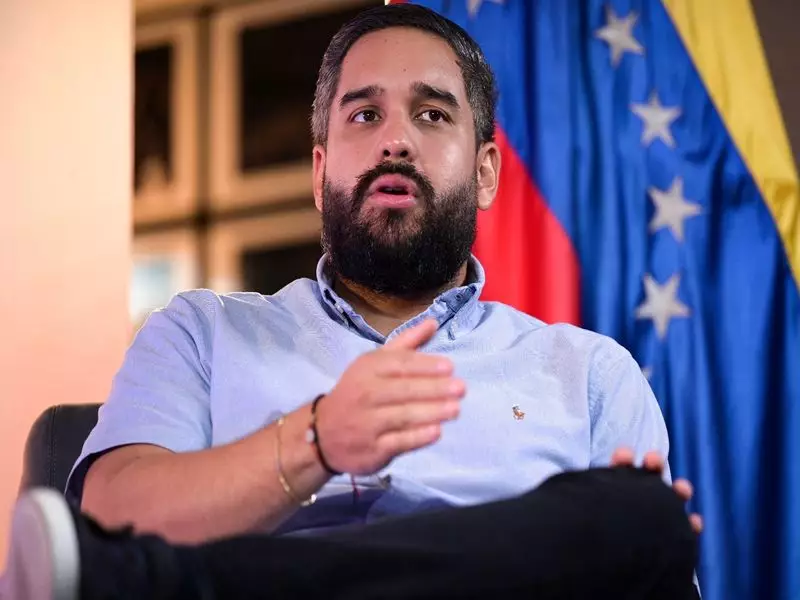
Nicolás Maduro Guerra, who also serves as a lawmaker in Venezuela's National Assembly, did not hold back in his support for the embattled president. His comments came directly after the United States Department of Justice unsealed charges and an arrest warrant against President Nicolás Maduro. The US alleges Maduro and several associates are involved in a conspiracy to flood America with cocaine.
"History will tell who the traitors were," stated Maduro Guerra, framing the US legal action as a politically motivated attack rather than a legitimate judicial process. He positioned his father and the Venezuelan government as victims of a long-running campaign led by external powers, primarily the United States.
The US Charges and the 'Narco-Terrorism' Allegation
The US Justice Department's case is severe. It accuses President Maduro and key members of his inner circle, including the head of the National Constituent Assembly, Diosdado Cabello, of running a 'narco-terrorism' partnership with the Colombian rebel group FARC for well over a decade. The alleged conspiracy purportedly aimed to "destabilize" the United States by trafficking hundreds of tonnes of cocaine.
In a significant escalation, the US State Department announced multi-million dollar rewards for information leading to the capture of Maduro and his co-accused. This move internationalizes the pressure campaign, treating the Venezuelan head of state as a fugitive from American law.
Venezuela's Retort and the Alex Saab Connection
The Venezuelan government's response has been one of outright rejection and condemnation. Officials in Caracas have labeled the US actions as a "vile aggression" and a desperate attempt at a judicial coup d'état. They argue it is part of a broader hybrid war targeting the nation's sovereignty and its chosen leadership.
This incident is deeply intertwined with the ongoing case of Alex Saab, a Colombian businessman described by the US as a frontman for Maduro. Saab was arrested in Cape Verde and is facing extradition to the US on money laundering charges. Venezuela maintains that Saab was a diplomatic envoy on a humanitarian mission, granting him diplomatic immunity. Maduro's government has threatened severe consequences if Saab is extradited, viewing his case as a direct precedent for the targeting of the president himself.
The situation creates a precarious international standoff. With arrest warrants and bounties now targeting a sitting head of state, diplomatic avenues have narrowed considerably. Maduro Guerra's emotional defense underscores the personal and national stakes involved, framing the conflict as a battle for Venezuela's historical narrative against what he terms foreign-backed treachery.