MEA Rejects Viral Claim on Foreign Funding of CJP Protests
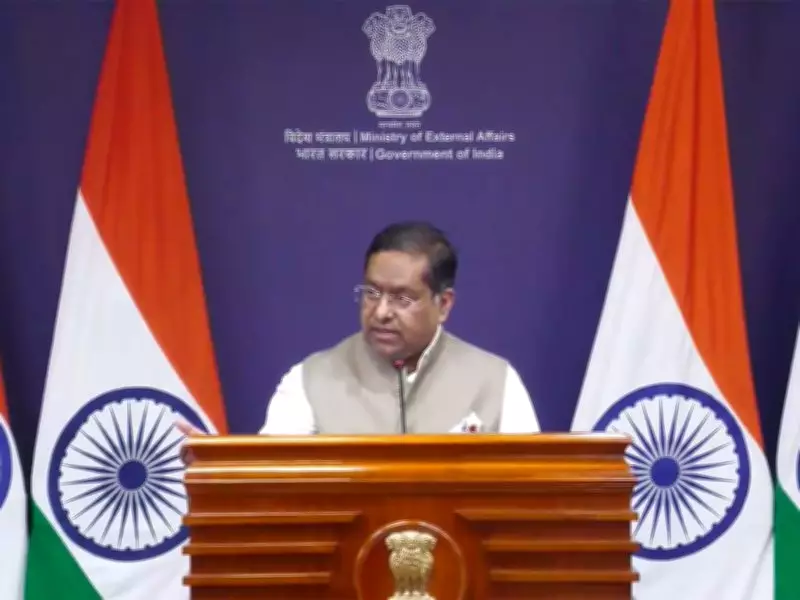
The Ministry of External Affairs (MEA) on Sunday debunked a viral claim on X that attributed a false statement to its spokesperson regarding foreign funding of the recent Cockroach Janata Party (CJP) protests. The MEA Fact Check unit labeled the post as "misleading" and a misrepresentation of Spokesperson Randhir Jaiswal's actual remarks made during the Ministry's biweekly media briefing on Friday.
Spokesperson's Actual Response Clarified
The viral post had claimed that Jaiswal said, "I have been asked about the funding of the CJP protest many a time. I want to say that our intelligence & investigation reveals there is no Foreign funding in it." However, the MEA Fact Check account cited the verbatim response: "Madhu, regarding the point you raised about allegations of foreign funding and other such claims in connection with the ongoing protests, I would like to say that I do not have any information on this matter to share with you at this time." The Ministry emphasized that no statement beyond that was made, and the viral post inaccurately portrayed the spokesperson's remarks.
Background of the CJP Protests
The CJP protests, which lasted 37 days, culminated in Education Minister Dharmendra Pradhan resigning on Saturday afternoon. The movement began as a satirical social media account after Chief Justice of India Surya Kant's remarks and later evolved into a full-fledged agitation at Jantar Mantar in New Delhi. The protesters withdrew after receiving government assurances on their demands.

Pradhan's Resignation and NEET-UG Paper Leak
Dharmendra Pradhan submitted his resignation to Prime Minister Narendra Modi, citing the larger interest of students and the need to prevent youth from becoming "trapped in a web of confusion." The resignation came amid nationwide protests over the NEET-UG 2026 paper leak. Union Minister Pralhad Joshi was assigned additional charge of the Education Ministry.
Key Developments in the Agitation
The protest site at Jantar Mantar saw significant activity with youth and students using creative banners and Gen Z slang. Ladakh activist Sonam Wangchuk joined the agitation with a 26-day hunger strike, supported by six student union leaders. Three of them were hospitalized, and the others broke their fast on July 20. Wangchuk was taken to Safdarjung Hospital by Delhi Police and later shifted to a private hospital in Gurugram on Delhi High Court orders.
The agitation intensified with the 'Chalo Sansad' march on July 20, which was met with police action. Opposition leaders including Samajwadi Party MP Dimple Yadav, CPI(M) leader Brinda Karat, CPI MP P Sandosh, former Delhi education minister Manish Sisodia, and Bhim Army chief Chandrashekhar Azad joined the protests.
Government Response and Parliamentary Action
The Centre is set to introduce the Public Examinations (Prevention of Unfair Means) Amendment Bill, 2026, in the Lok Sabha on Monday. The bill proposes fast-track courts and stringent punishments to address exam malpractices. The Opposition and the government are expected to clash in Parliament over the issue.
Conclusion
The MEA's fact-check underscores the importance of verifying claims on social media, especially those involving official statements. The CJP protests have triggered significant political and policy changes, including the resignation of a Union minister and new legislation to prevent exam fraud.