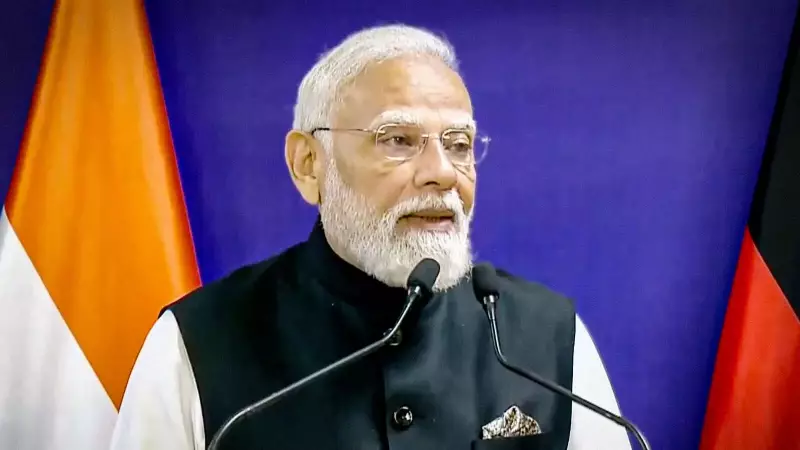
In a significant diplomatic engagement highlighting India's growing global stature, Prime Minister Narendra Modi and German Chancellor Friedrich Merz inked a series of crucial agreements on January 12, 2026. The deals, signed during Chancellor Merz's inaugural visit to India, span critical sectors including defence, clean energy, trade, technology, and mobility.
A Strategic Partnership for the Indo-Pacific
Prime Minister Modi underscored that the Indo-Pacific region remains a shared priority for both nations. To bolster collaboration in this vital maritime space, the leaders announced the establishment of a new consultation mechanism. This framework is designed to enhance regional cooperation and ensure stability, reflecting a mutual commitment to a free, open, and inclusive Indo-Pacific.
Expanding the Bilateral Horizon: From Trade to Green Hydrogen
The summit yielded substantial outcomes across multiple domains. PM Modi highlighted that bilateral trade has crossed a historic milestone of 50 billion dollars, setting a new record. The partnership is also deepening in defence and security, with agreements aimed at strengthening industrial and technological ties.

On the front of sustainable development, both countries committed to advancing cooperation in green hydrogen projects. This aligns with global clean energy transitions and positions the India-Germany partnership as a leader in climate-friendly technology. The leaders also pledged to intensify joint efforts to address the concerns and aspirations of the Global South.
Shared Stance on Global Challenges
During their comprehensive discussions, PM Modi and Chancellor Merz exchanged views on pressing international issues, including the situations in Ukraine and Gaza, alongside broader global security concerns. They issued a strong condemnation of terrorism in all its forms, labeling it the ultimate evil confronting humanity today.
Emphasizing the need for contemporary global governance, Prime Minister Modi stated that India and Germany are united in their pursuit to reform global institutions. The objective is to collaboratively shape a more equitable, representative, and effective international order.
The high-level talks and the suite of agreements signal a robust and forward-looking strategic partnership, with both democratic powers aligning closely on economic, security, and geopolitical fronts.