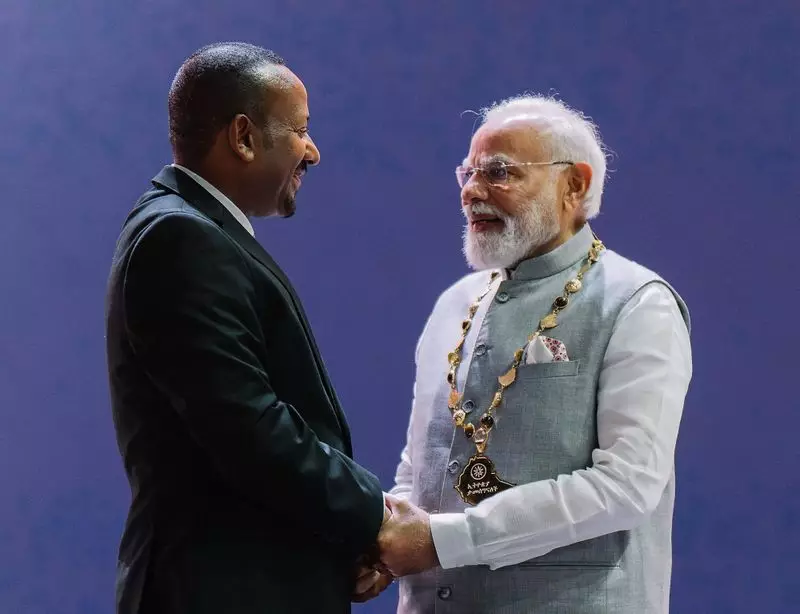
Prime Minister Narendra Modi's recent visit to Ethiopia has been hailed as a significant step forward in strengthening the long-standing partnership between the two nations. The visit, which took place on the sidelines of a major international summit, resulted in concrete outcomes aimed at deepening economic and developmental cooperation with a strong people-centric focus.
Strengthening Strategic and Developmental Ties
During his engagements in Addis Ababa, Prime Minister Modi held extensive discussions with Ethiopian leaders. He emphasized that the India-Ethiopia partnership is built on mutual trust and shared developmental goals. A key highlight was the reaffirmation of India's commitment to supporting Ethiopia's nation-building efforts, drawing parallels to India's own journey as a diverse democracy.
The leaders reviewed the entire spectrum of bilateral relations, noting positive progress in several agreed areas of cooperation. The discussions were forward-looking, with both sides charting a roadmap for future collaboration. This high-level dialogue underscored the strategic importance both nations place on their relationship within the broader context of India's engagement with the African continent.

Key Agreements and Areas of Cooperation
The visit culminated in the signing of several pivotal agreements designed to translate diplomatic goodwill into tangible benefits for both populations. While specific details of the pacts were not fully disclosed in the initial report, the outcomes are understood to span critical sectors.
Trade and investment emerged as a major theme, with both countries expressing a desire to boost economic exchanges. India's expertise in infrastructure development, technology, and capacity building aligns with Ethiopia's growth priorities, creating a natural synergy for partnership. The cooperation model extends beyond government-to-government ties to include stronger people-to-people connections and business linkages.
A People-Centric Partnership for the Future
Prime Minister Modi specifically highlighted the "people-centric" nature of the revitalized partnership. This approach ensures that the fruits of cooperation directly impact citizens' lives through job creation, skill development, and access to technology. The partnership is seen as a model for South-South cooperation, where developing nations collaborate to share knowledge, resources, and best practices.
The successful visit has set a new trajectory for India-Ethiopia relations. It marks a shift from traditional diplomacy to a more comprehensive and outcome-oriented engagement. The focus on sustainable development, economic resilience, and mutual growth positions this partnership as a key pillar of India's foreign policy in Africa. The outcomes are expected to foster greater stability and prosperity, benefiting not just the two nations but also contributing to regional progress.
Analysts view this as part of India's consistent efforts to deepen its footprint in Africa through respectful and mutually beneficial partnerships, contrasting with other models of engagement. The emphasis on capacity building and local empowerment, rather than mere resource extraction, forms the cornerstone of this evolving relationship.