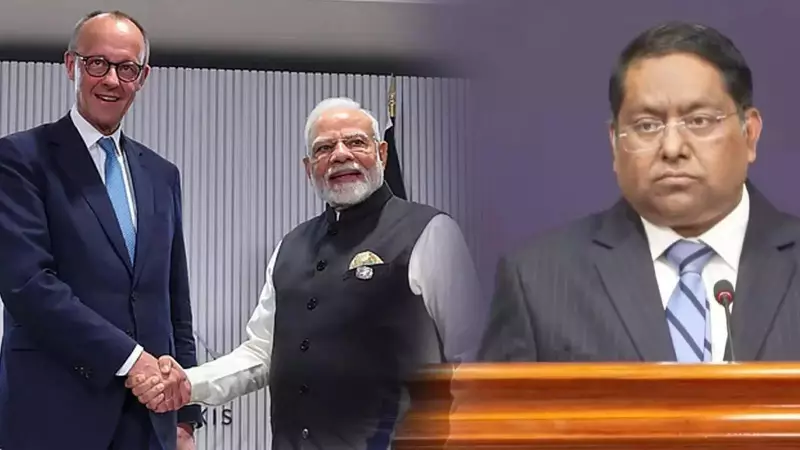
Prime Minister Narendra Modi is set to host German Chancellor Friedrich Merz in Gujarat, in a visit that underscores a significant deepening of strategic ties between the two nations. Chancellor Merz's decision to choose India as his first official foreign destination sends a powerful geopolitical signal about Berlin's priorities in a changing world order.
A Visit Steeped in Symbolism and Substance
The high-level meetings, taking place in Ahmedabad and Gandhinagar on January 9, 2026, are timed to review 25 years of the Indo-German partnership. The itinerary cleverly blends symbolic gestures with hard-nosed strategic dialogue. The visit is expected to include a stop at the historic Sabarmati Ashram, paying homage to Mahatma Gandhi's legacy, before moving to substantive bilateral talks.
Berlin has openly termed India a central partner in the evolving global framework, a stance that gives this visit considerable weight. The discussions are poised to cover a wide spectrum of critical areas, reflecting the multifaceted nature of the relationship.

Key Focus Areas: From Defence to Trade
At the top of the agenda will be enhancing defence cooperation and global security collaboration. Germany's defence engagement with India has been visibly increasing, marked by more frequent joint military exercises and a growing interoperability between the forces of the two democracies.
On the economic front, trade and the stalled India-EU Free Trade Agreement (FTA) will be crucial talking points. Both leaders are expected to push for a breakthrough in the long-pending negotiations, which are seen as vital for unlocking the full potential of economic ties. The visit occurs against a backdrop of global instability, which is driving Europe, and Germany in particular, to seek more reliable and capable partners like India.
The Pillars of a Deepening Partnership
Beyond government-to-government ties, the India-Germany relationship is being fortified by strong people-to-people connections. Indian students have become a backbone for many German universities, contributing to Germany's academic and research ecosystem while forging long-term professional bonds.
This combination of strategic alignment, economic synergy, and human capital exchange marks a shift towards a more pragmatic and deeper phase of relations. Chancellor Merz's visit is not merely ceremonial; it is a concrete step to translate the shared vision of a strategic partnership into actionable outcomes across defence, trade, technology, and climate action.
The outcomes of this summit in Gujarat are likely to set the tone for the next decade of India-Germany cooperation, positioning the two nations as key anchors of stability and growth in an increasingly multipolar world.