

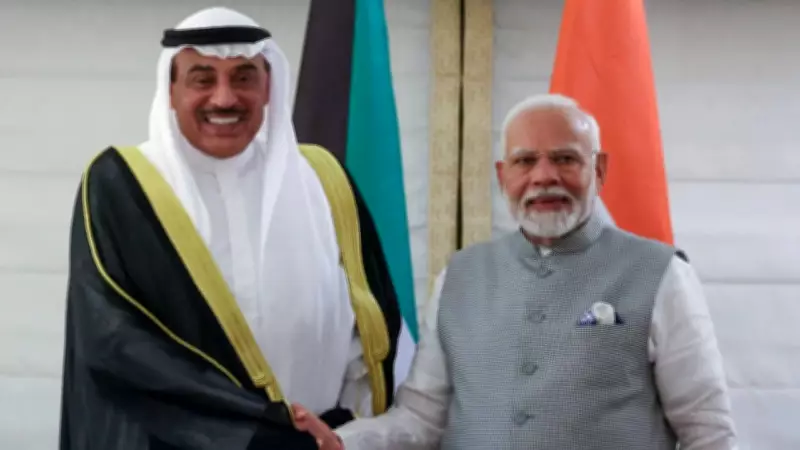
PM Modi Reiterates Importance of Safe Hormuz Passage in Kuwait Dialogue
Prime Minister Narendra Modi engaged in a crucial diplomatic conversation with Kuwait Crown Prince Sabah Al-Khaled Al-Hamad Al-Mubarak Al-Sabah, focusing on regional stability and energy security. This discussion represents India's ongoing strategic engagement with Gulf nations amid escalating tensions in West Asia.
Condemnation of Attacks and Navigation Concerns
During their exchange, Prime Minister Modi strongly condemned the recent Iranian attacks on Kuwait, emphasizing India's firm stance against violations of sovereignty and territorial integrity. The dialogue particularly highlighted the critical importance of ensuring safe and unrestricted navigation through the Strait of Hormuz, a vital global energy corridor through which approximately 21% of global petroleum liquids pass.
"We exchanged views on the evolving situation in West Asia and shared concerns over recent developments. Reiterated India's condemnation of attacks on Kuwait's sovereignty and territorial integrity. Ensuring safe and free navigation through the Strait of Hormuz remains our foremost priority," stated Prime Minister Modi in a social media post following the conversation.

Second High-Level Exchange Since Regional Escalation
This marks the second direct communication between the Indian Prime Minister and the Kuwaiti Crown Prince since the United States and Israel conducted strikes against Iranian targets on February 28. The timing underscores the urgency of diplomatic coordination as regional conflicts intensify.
Earlier this week, Prime Minister Modi also spoke with United Arab Emirates President Mohamed bin Zayed Al Nahyan, conveying similar concerns about regional security and the necessity of maintaining open sea lanes for energy transportation. In both conversations, the Indian leader extended Eid greetings to the Gulf leaders, maintaining cultural and diplomatic rapport.
Energy Security and Indian Community Protection
The discussions also addressed practical dimensions of the bilateral relationship. Kuwait plays a significant role in India's energy security matrix, accounting for approximately 3.5% of India's total energy requirements during the 2024-25 period. The Gulf nation ranks as India's sixth largest supplier of crude oil and fifth largest source of liquefied petroleum gas (LPG).
Prime Minister Modi expressed gratitude for Kuwait's continued support in ensuring the safety and welfare of the substantial Indian community residing in Kuwait. "We agreed that sustained diplomatic engagement remains essential for regional peace and stability. I thanked him for continued support for the safety and well-being of the Indian community in Kuwait," the Prime Minister added.
Broader Gulf Coordination Strategy
Indian diplomatic sources indicate that Prime Minister Modi is expected to engage with leaders of other Gulf Cooperation Council (GCC) countries in the coming days. This coordinated outreach reflects India's comprehensive approach to regional diplomacy, balancing energy security interests with broader geopolitical stability concerns.
The Strait of Hormuz remains a critical chokepoint for global energy markets, with its security directly impacting India's substantial oil imports from the region. Recent developments, including Iranian missile launches and retaliatory strikes, have heightened concerns about potential disruptions to maritime traffic through this narrow passage between the Persian Gulf and the Gulf of Oman.
India's diplomatic engagements in the Gulf region demonstrate a multi-faceted strategy that combines:
- Energy security assurance through protected sea lanes
- Condemnation of unilateral actions threatening regional stability
- Protection of Indian diaspora interests in Gulf nations
- Promotion of sustained diplomatic dialogue as the primary mechanism for conflict resolution
As tensions continue to evolve in West Asia, India maintains its position as both a significant energy consumer with vital interests in the region and a diplomatic voice advocating for peaceful resolution of conflicts through dialogue and international cooperation.






