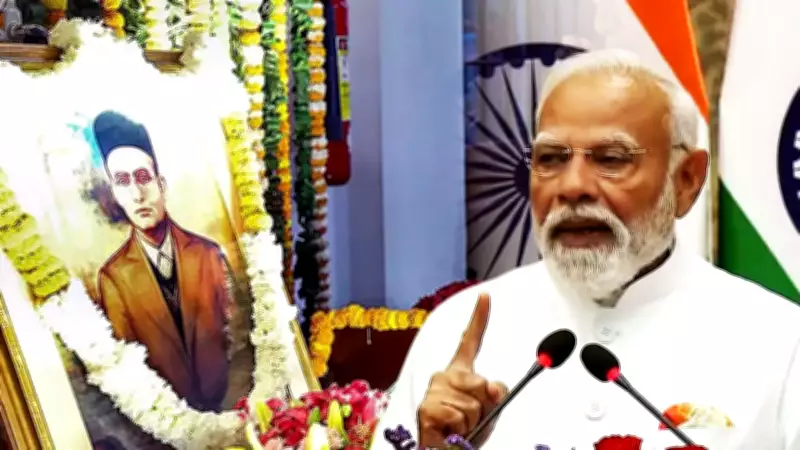
PM Modi Revives Veer Savarkar's 1910 Marseille Escape During Talks with French President Macron
In a significant diplomatic engagement, Prime Minister Narendra Modi has brought to light a pivotal moment from India's freedom struggle during discussions with French President Emmanuel Macron. The Prime Minister specifically highlighted the daring 1910 escape attempt by revolutionary Veer Savarkar at the port of Marseille, framing it as a powerful symbol of India's relentless pursuit of independence.
The Historic Marseille Incident: A Leap for Freedom
The episode, which occurred over a century ago, saw Savarkar make a bold leap into the sea from a ship docked at Marseille while being transported as a prisoner by British authorities. This dramatic act was not merely an escape attempt but a statement of defiance against colonial rule. Prime Minister Modi emphasized how this event underscored the early global dimensions of India's independence movement, as it sparked an international legal dispute between Britain and France over jurisdiction and extradition.
This incident highlighted how India's struggle for freedom resonated beyond its borders, involving European powers in complex diplomatic and legal tangles. Savarkar's subsequent capture led to his imprisonment in the notorious Cellular Jail in the Andaman Islands, where he endured harsh conditions. His later political career and writings have continued to shape intense debates around his legacy, with some viewing him as a heroic freedom fighter and others as a controversial figure.

Connecting Historical Memory with Modern Diplomacy
By recalling the Marseille incident, Prime Minister Modi skillfully connected historical memory with the present-day strategic partnership between India and France. This move blends diplomacy with deep symbolism, suggesting that shared historical narratives can strengthen contemporary bilateral relations. The reference serves as a reminder of the long-standing, albeit complex, interactions between India and France, which now encompass areas like defense, trade, and cultural exchange.
The revival of Savarkar's saga during high-level talks underscores how historical events can be leveraged to foster mutual understanding and cooperation in international relations. It also reflects the Indian government's ongoing efforts to highlight lesser-known aspects of the freedom struggle, integrating them into national discourse and foreign policy narratives.
Broader Implications for India-France Relations
This diplomatic gesture is part of a broader context where India and France are deepening their strategic ties. The mention of Savarkar's 1910 escape not only honors a chapter of history but also reinforces the shared values of liberty and resistance against oppression that both nations cherish. As India and France collaborate on global issues like climate change, security, and technology, such historical references can add emotional depth to their partnership.
In summary, Prime Minister Modi's focus on Veer Savarkar's Marseille leap during talks with President Macron serves multiple purposes: it commemorates a key moment in India's independence movement, highlights the early internationalization of that struggle, and symbolically enriches the current India-France strategic relationship. This approach demonstrates how history can be a tool for diplomacy, bridging past sacrifices with present-day alliances.