

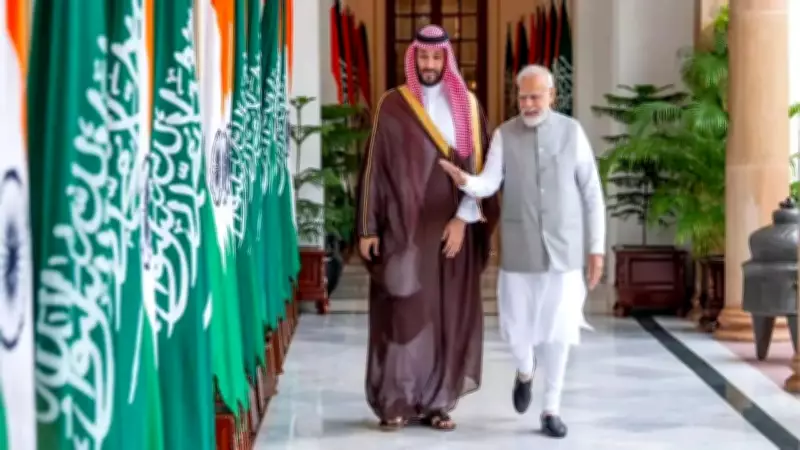
PM Modi and Saudi Crown Prince Address Red Sea Security Concerns
Prime Minister Narendra Modi has held a crucial telephone conversation with Saudi Crown Prince and Prime Minister Mohammed bin Salman, reiterating India's deep concerns regarding the freedom of navigation in the Red Sea. This discussion comes as the Iran-aligned Houthi group has escalated regional tensions by firing missiles at Israel, thereby entering the broader West Asian conflict and raising alarms over the security of Saudi crude oil transport through these vital waters.
Agreement on Securing Shipping Lanes
Following their dialogue, Prime Minister Modi took to social media platform X to share key outcomes. "We agreed on the need to ensure freedom of navigation and keep shipping lines secure. Thanked him for his continued support for the welfare of the Indian community in Saudi Arabia," Modi stated, highlighting the mutual commitment to maritime security and diaspora welfare. This marks the second telephonic exchange between the two leaders since the West Asia conflict ignited on February 28, underscoring the ongoing diplomatic engagement.
Condemnation of Attacks on Energy Infrastructure
During the conversation, Modi also reiterated India's firm condemnation of attacks targeting regional energy infrastructure. The Houthis, a Shiite faction backed by Iran that controls Yemen, had previously remained on the sidelines of the conflict. However, their recent missile strikes against Israel signal a dangerous expansion of hostilities. In 2023, as part of their ongoing struggle, the Houthis blocked the Bab el-Mandab Strait, a narrow chokepoint critical for global energy and cargo flows, exacerbating supply chain vulnerabilities.

Strategic Implications for Global Energy Security
The situation is particularly precarious given existing risks around the Strait of Hormuz, another key maritime passage controlled by Iran. Any disruption at Bab el-Mandeb could further strain already sensitive global supply chains, impacting oil prices and economic stability. Modi has consistently emphasized the importance of keeping the Strait of Hormuz open to safeguard global energy security, a point he has raised in multiple discussions with Gulf Cooperation Council (GCC) leaders since the conflict began.
India's Diplomatic Outreach in the Gulf
Underscoring India's significant energy and diaspora interests in the Gulf region, Modi has engaged in two rounds of talks with all GCC country leaders since February 28. In these exchanges, he has condemned violations of sovereignty and territorial integrity, reflecting India's strategic focus on regional stability. Notably, India has yet to issue a condemnation of the US-Israel strikes on Iran, maintaining a nuanced diplomatic stance amid the complex geopolitical landscape.
The Houthi's involvement adds a new layer of complexity to the West Asia conflict, with their history of blocking vital straits posing a direct threat to international trade routes. As tensions simmer, Modi's proactive dialogue with Saudi Arabia highlights India's role in advocating for secure maritime corridors and protecting its economic and community interests in one of the world's most volatile regions.






