

NASA Confronts Budgetary Dilemma: More Moon Missions with Less Funding
NASA finds itself navigating a challenging paradox as a proposed US budget for 2027 seeks to slash nearly a quarter of the agency's funding while maintaining ambitious goals to return humans to the Moon, establish a lunar base, and push deeper into space. This creates a fundamental tension between exploration and scientific research, ambition and fiscal restraint.
The Stark Numbers Behind the Proposed Cuts
The budget proposal would reduce NASA's overall funding by approximately 23-25%, bringing it down to around $18.8 billion. This reduction comes despite continued pressure to accelerate the flagship Artemis program, which aims to return astronauts to the lunar surface and create a sustained human presence there. This is not merely a financial story but a profound question about NASA's identity and priorities in the 21st century.
Administration's Rationale for Restructuring
These cuts are part of a broader push for fiscal efficiency across US government agencies. NASA Administrator Jared Isaacman has publicly supported the proposal, arguing that the agency's primary challenge is execution rather than funding. The administration contends that NASA already possesses substantial resources through previous appropriations and supplemental funding, and the current focus should shift toward delivering tangible results rather than increasing expenditures.

This approach emphasizes visible outcomes over institutional expansion, with concentrated efforts on accelerating key missions instead of maintaining a diverse portfolio of programs.
Uneven Impact Across NASA Divisions
The proposed reductions are not distributed equally across NASA's operations. The science budget faces the most severe impact, with nearly half of its funding potentially eliminated. Space technology programs also confront deep cuts approaching one-third of their current allocations. In stark contrast, exploration programs, particularly those connected to the Artemis mission, receive protection and even priority status.
This creates a significant imbalance within the agency. While human spaceflight initiatives continue advancing, numerous scientific missions, especially those in early development phases or extended operations, face potential cancellation or substantial scaling back.
The Strategic Shift in NASA's Core Mission
NASA has historically balanced two fundamental functions: exploration that captures public imagination and geopolitical prestige, and science that builds knowledge and long-term capabilities. The proposed budget decisively shifts this balance toward exploration at the expense of scientific research.
The consequences are substantial and far-reaching. Fewer science missions translate to reduced data collection, slower progress in understanding planetary systems, and diminished leadership in global space research. Over time, this could erode one of NASA's most significant strengths: its unique ability to combine ambitious exploration with groundbreaking discovery.
In practical terms, NASA may reach the Moon faster but understand less about the universe when arriving there.
The Artemis Program as Central Gambit
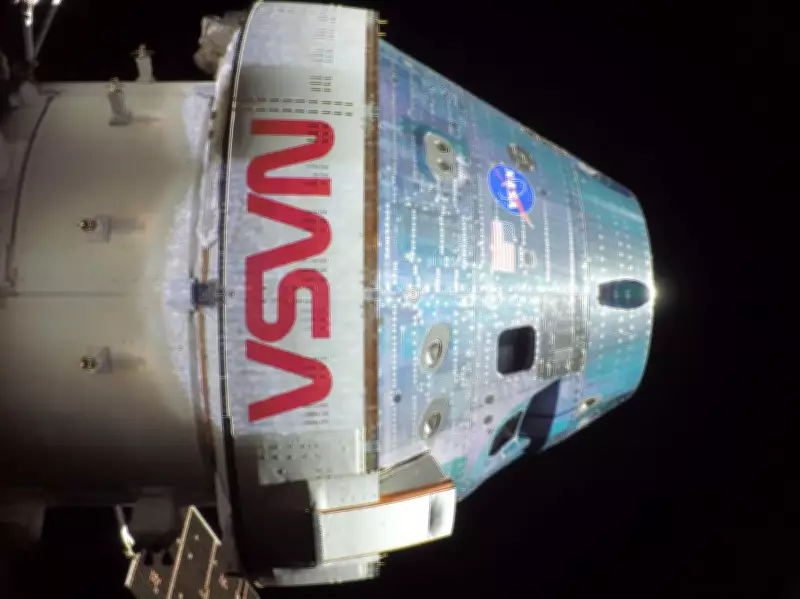
At the heart of this strategic shift lies the Artemis program, which aims to return humans to the Moon and establish long-term lunar presence. The administration believes that building a lunar base and conducting frequent missions will unlock new technological and scientific opportunities, viewing Artemis as the foundation for future exploration including eventual missions to Mars.
Supporters argue that concentrated investment in Artemis will deliver tangible results such as sustained lunar operations and infrastructure development. Critics, however, warn that this narrow focus comes at the expense of a broader scientific agenda that has traditionally driven NASA's most significant discoveries.

Changing Communication and Global Context
Another notable shift appears in how the budget has been communicated. Unlike previous years, there have been no major public briefings or high-profile announcements from NASA leadership. Instead, messaging has become more restrained and internal, emphasizing mission objectives over political debate. This reflects a subtle transformation in the agency's posture from a publicly communicative scientific institution to a more tightly managed, outcome-driven organization.
NASA remains the world's largest space agency, with resources still exceeding those of global counterparts. However, the competitive landscape is evolving rapidly with China advancing its own lunar ambitions, private companies reshaping spaceflight economics, and international collaborations becoming more strategic. In this environment, funding allocation decisions represent not just domestic policy choices but strategic positioning in a new global space race.
The Bottom Line: A Strategic Pivot with Uncertain Consequences
This represents more than simple budget reductions—it constitutes a strategic pivot reshaping NASA into an agency that prioritizes visible milestones over incremental discovery, human exploration over robotic science, and efficiency over institutional breadth. Whether this transformation makes NASA more effective or more limited will depend on how successfully it can deliver on its ambitions without undermining its scientific foundation.
For now, the agency is placing a calculated bet that returning to the Moon will justify everything it has chosen to leave behind in terms of scientific research and technological development. The coming years will reveal whether this gamble pays off in advancing human space exploration while maintaining America's leadership in space science.





