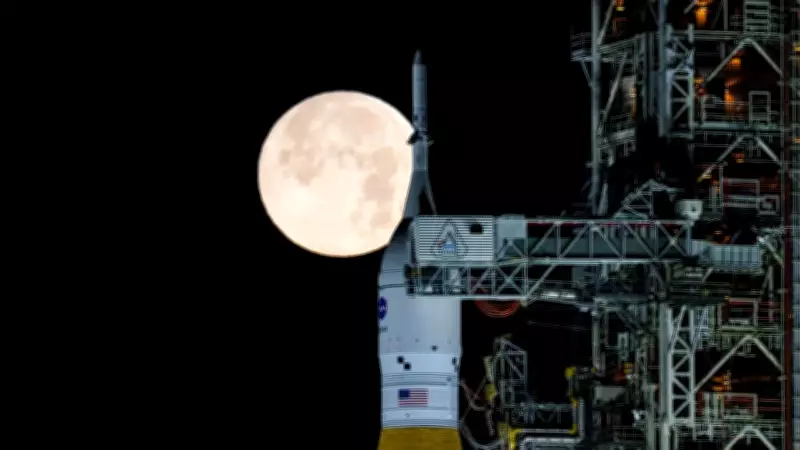
NASA Initiates Rollback of Artemis II Moon Rocket for Critical Repairs
In a significant development for lunar exploration, NASA announced on Wednesday that it has commenced the process of rolling its grounded Artemis II moon rocket and Orion spacecraft off the launch pad. The massive 322-foot (98-meter) Space Launch System (SLS) rocket is being transported back to the Vehicle Assembly Building at Kennedy Space Center to address a newly discovered technical problem.
Technical Issue Forces Return to Assembly Building
The rollback operation began at approximately 9:28 a.m. EST and is expected to take roughly 12 hours to complete. During this slow-motion journey, the rocket and spacecraft will crawl the approximately 4-mile (6.4-kilometer) distance back to the protective hangar environment. NASA confirmed the move in an X post, stating: "Teams are rolling the Artemis II rocket and spacecraft off the launch pad and back to the Vehicle Assembly Building. There, we will work to fix a helium flow issue."
Engineers identified a malfunction in the rocket's helium pressurization system that requires more detailed inspection and troubleshooting. This technical setback follows earlier delays caused by hydrogen fuel leaks during previous testing phases, compounding the challenges facing the ambitious lunar mission.

Mission Timeline Impact and Public Engagement
With the rollback now underway, NASA officials have confirmed that the previously targeted March launch window is no longer achievable. The Artemis II mission, which aims to send four astronauts on a lunar flyby mission, represents the first crewed flight of the Artemis program and serves as a crucial step toward returning humans to the Moon for long-term exploration.
NASA is making the rollback operation accessible to the public by streaming it live on their official YouTube channel. This provides space enthusiasts and interested viewers worldwide with a full-day view of the recovery operations and the careful transportation of this monumental spacecraft.
Crew Activities During Delay
The mission delay has altered the schedule for the four Artemis II astronauts, who were in Washington, D.C., on Tuesday night as special guests at the U.S. President's State of the Union address. With the launch postponed, the crew members no longer needed to maintain their pre-flight quarantine protocols, allowing them to participate in this significant political event.
This development underscores the complex nature of space exploration, where technical precision must balance with mission timelines and crew preparations. NASA's commitment to thorough troubleshooting before launch reflects the agency's prioritization of astronaut safety and mission success over arbitrary schedule adherence.