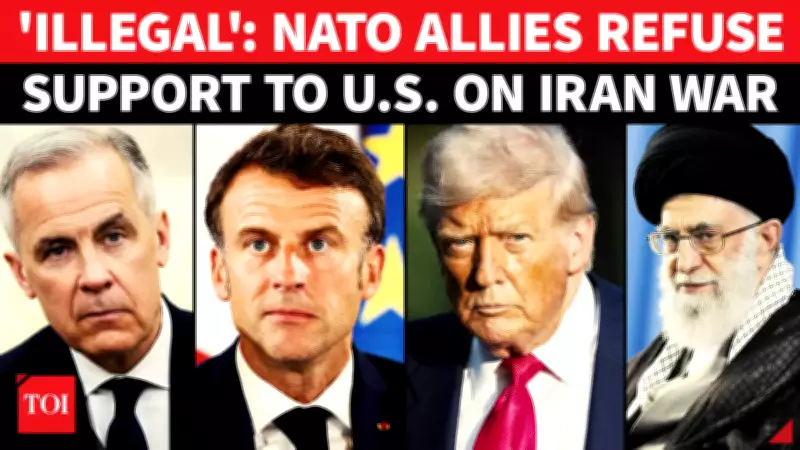
NATO Alliance Fractures as European Leaders Condemn U.S.-Israel Military Action in Iran
In a dramatic display of transatlantic discord, key NATO allies have publicly broken ranks over the ongoing military conflict in Iran. French President Emmanuel Macron and Canadian Prime Minister Mark Carney have issued scathing condemnations of the joint U.S. and Israeli offensive, labeling it as a blatant violation of international law and declaring their nations will not offer any support to the campaign.
Leaders Voice Legal and Diplomatic Objections
Speaking from Sydney, Australia, Prime Minister Mark Carney expressed profound dismay at the lack of consultation from Washington and Tel Aviv. "We were not informed in advance," Carney stated unequivocally during a press conference. "We were not asked to participate. Prima facie, it appears that these actions are inconsistent with international law." This strong legal rebuke underscores the deepening rift within the Western alliance.
President Macron echoed these sentiments, aligning France with Canada in its refusal to back the military operations. The coordinated criticism from two pivotal NATO members signals a significant diplomatic crisis, challenging the unity of the alliance at a time of heightened global tension.

Trump's Controversial Remarks Amid Escalating Conflict
The leaders' statements come just days into a war that has already resulted in hundreds of casualties, predominantly within Iran. The conflict has claimed the lives of many of Iran's top leadership figures, including Supreme Leader Ayatollah Ali Khamenei. In a controversial address, U.S. President Donald Trump suggested that "someone from within" Iran's government might be best positioned to assume power once the military campaign concludes.
This remark has further inflamed tensions, adding to the complex geopolitical landscape. The war's rapid escalation and the high-profile casualties have drawn international scrutiny, with many questioning the legality and strategic wisdom of the offensive.
Broader Implications for NATO and Global Security
The public denouncement by Macron and Carney highlights a growing schism within NATO, traditionally a bastion of collective defense and strategic alignment. Their refusal to support the U.S.-Israel action not only isolates Washington diplomatically but also raises critical questions about the future cohesion of the alliance. This split could have far-reaching consequences for global security frameworks and international diplomatic norms.
As the conflict continues to unfold, the stance taken by France and Canada may inspire other nations to reevaluate their positions, potentially leading to a broader coalition of dissent against the military operations. The situation remains fluid, with ongoing developments likely to further test the resilience of international alliances and the adherence to established legal protocols in warfare.