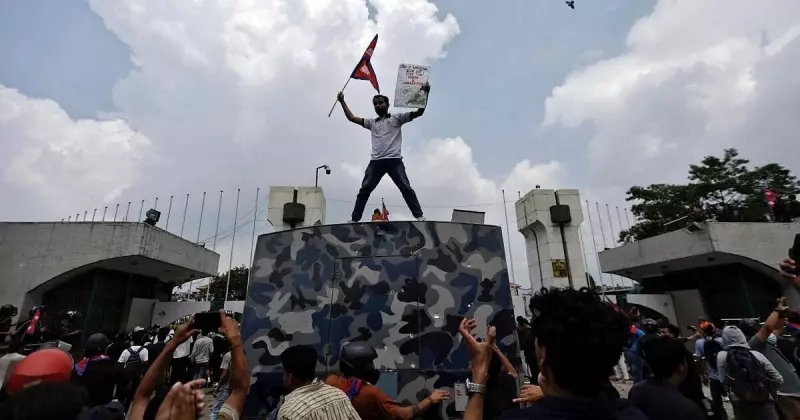
The political landscape of Nepal is poised for a significant shift as the country heads towards its next general elections. A defining feature of this electoral battle is the rising influence of Generation Z voters, who are actively challenging the established political order, often referred to as the 'Old Guard'. This demographic shift carries profound implications for Nepal's domestic politics and its foreign relations, particularly with its southern neighbour, India.
A New Electorate Emerges in the Himalayas
The 2026 elections in Nepal are witnessing an unprecedented engagement from young, first-time voters. This Gen Z cohort, digital natives who have grown up in a post-monarchy, federal democratic republic, brings a distinct set of priorities and a deep skepticism towards traditional political narratives. Their concerns are sharply focused on issues like employment, economic development, governance transparency, and climate action, rather than the historical ideological divides that have long defined Nepali politics.
This surge of youth participation is directly challenging the Old Guard – the veteran leaders and parties that have dominated the political scene for decades. The established parties are now compelled to recalibrate their agendas and communication strategies to resonate with this powerful new voting bloc. The election outcome, therefore, may hinge on which political forces can most effectively harness the energy and aspirations of Nepal's youth.

India's Strategic Imperative: Engage with Kathmandu
Against this backdrop of domestic political churn, a crucial recommendation has been made for Indian foreign policy. Former Indian diplomat Ranjit Rae, who served as India's Ambassador to Nepal, has emphasized the need for Delhi to adopt a consistent and pragmatic approach. In his analysis, published on 02 January 2026, Rae argues that India should initiate a dialogue process with the new government in Kathmandu as soon as it takes office after the elections.
The key point of his argument is that this engagement must be irrespective of the new government's political orientation. Whether the incoming administration is led by left-leaning parties, centrist forces, or a new coalition influenced by youth agendas, India's national interests are best served by opening channels of communication early and constructively. This approach would aim to foster stability, enhance bilateral cooperation on development projects, and address any cross-border concerns proactively.
Looking Beyond Ideology for Regional Stability
The call for sustained dialogue underscores a mature vision for India-Nepal relations. The bilateral relationship, bound by geography, history, and culture, has occasionally experienced strains due to political changes in Kathmandu. By committing to dialogue with any democratically elected government, India can demonstrate respect for Nepal's sovereign choices and work towards building a partnership that is resilient to political cycles.
The evolving voter dynamics in Nepal, driven by its youth, signal a future where policy and performance will be scrutinized more than ever. For India, a neighbour with deep-rooted ties, adapting to this new political reality in Nepal is not just an option but a strategic necessity. Engaging with the new government in Kathmandu, regardless of its composition, will be the first critical step in navigating the next chapter of this vital Himalayan partnership.