

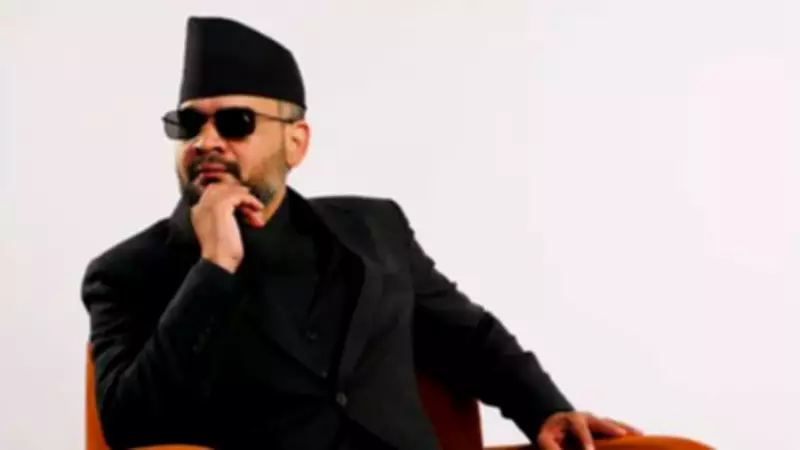
Nepal's New Government Launches Historic Probe into Assets of Political Elite
In a groundbreaking development, the recently formed Balendra Shah government in Nepal has initiated an unprecedented judicial investigation into the assets of individuals who have held public office over the past two decades. The administration has established a five-member judicial commission tasked with scrutinizing the wealth accumulation of the country's political and bureaucratic leadership from 2006 through the current fiscal year of 2025-26.
Unprecedented Scope of Investigation
This represents the most comprehensive examination of Nepal's post-monarchy elite ever attempted. The probe will cast its net remarkably wide, encompassing former monarchs, multiple presidents, every head of government since 2005-06, and an extensive array of ministers, constitutional office-holders, and senior bureaucrats.
The investigation's targets include:

- Former King Gyanendra Shah
- Three presidents: former presidents Ram Baran Yadav and Bidya Devi Bhandari, along with current president Ram Chandra Paudel
- All prime ministers since 2005-06 including Girija Prasad Koirala, Pushpa Kamal Dahal, Madhav Kumar Nepal, Jhala Nath Khanal, Baburam Bhattarai, KP Sharma Oli, and Sher Bahadur Deuba
- Interim government heads Khilraj Regmi and Sushila Karki
Expanding the Investigation Frame
The commission's mandate extends beyond just current and former national leaders. The widening scope brings attention to figures connected to Prime Minister Shah's own political environment, including current Speaker Dol Prasad Aryal, ministers Birajbhakt Shrestha and Shishir Khanal, and Rastriya Swatantra Party chief Rabi Lamichhane, who previously held public positions.
Remarkably, the inquiry will also examine assets of deceased leaders, bringing the families and political heirs of prominent figures like Girija Prasad Koirala and Sushil Koirala under scrutiny. This represents a significant expansion of traditional corruption investigations.
Commission Formation and Mandate
The five-member commission, headed by retired Supreme Court judge Rajendra Kumar Bhandari, was established weeks after Shah's Rastriya Swatantra Party achieved a sweeping victory in the March 5 elections. This electoral success was largely attributed to widespread youth-led anti-corruption protests that occurred last year.
Cabinet spokesperson Sasmit Pokhrel emphasized that the panel would conduct its investigation strictly according to legal standards and evidence. "An impartial investigation will be carried out based on evidence according to legal standards," Pokhrel stated. "Its report and recommendations will be implemented by concerned agencies of the government."
Phased Approach to Governance Reform
This investigation forms a crucial component of Prime Minister Shah's ambitious 100-point governance reform agenda. The first phase will concentrate on officials who served from 2006 to the present fiscal year, while the second phase is designed to examine the period from 1991 to 2005, creating a comprehensive thirty-five-year review of public officials' wealth accumulation.
Political Reactions and Historical Context
The main opposition party, Nepali Congress, acknowledged the appropriateness of such a commission but stressed the need for permanent legal foundations. Spokesperson Devraj Chalise commented, "We are clear that the assets of those who held executive office since 1990 must be probed. Rather than just forming such a commission, legal provisions should be established. Investigation should be fair and evidence-based."
KP Sharma Oli's CPN-UML party expressed general support for scrutiny while emphasizing that the commission must operate strictly on factual evidence. Meanwhile, youth activists who spearheaded the September 2025 uprising that toppled the previous government expressed cautious optimism.

Twenty-six-year-old Gen Z activist Rakshya Bam, who was at the forefront of those protests, told reporters, "We welcome the decision — our protest was, among other issues, against corruption in the upper echelons of the political system. However, the real test is political will. It's well known that a property inquiry panel was formed by the Deuba government in 2002, and a report was submitted in 2003. Its findings, though, were never made public."
This historical context highlights both the significance of the current initiative and the challenges it faces in achieving meaningful transparency and accountability in Nepal's political system.





