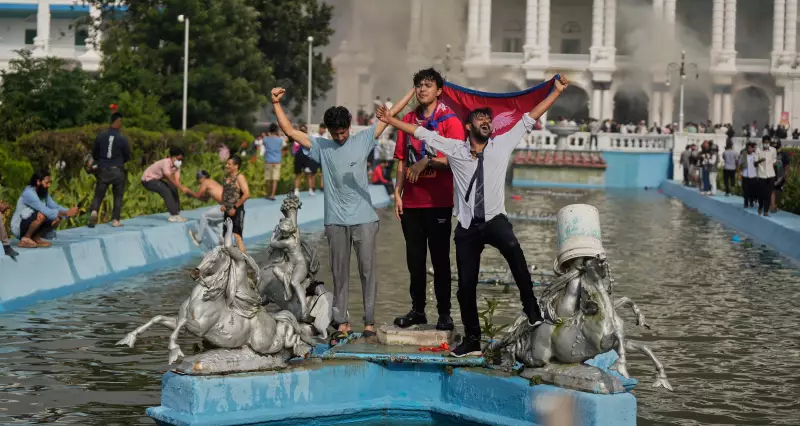
A powerful anti-corruption movement in Nepal, spearheaded by its youth, has delivered a significant geopolitical shockwave, severely undermining China's carefully cultivated influence and its flagship Belt and Road Initiative (BRI) projects in the Himalayan nation. This shift has prompted Beijing to abandon its aggressive 'Wolf Warrior' diplomacy for a cautious 'wait-and-watch' approach, while creating a fresh opportunity for India to rebuild frayed ties.
The Pokhara Airport Scandal: A Catalyst for Change
The turning point became starkly visible with a long-awaited corruption case filed by Nepal's anti-graft body. On January 7, 2026, the Commission for the Investigation of Abuse of Authority (CIAA) moved the Special Court against dozens of high-profile politicians and bureaucrats. They are accused of massive irregularities in the construction of the China-funded Pokhara International Airport (PIA).
The project, built with a Chinese loan of $215.96 million, is alleged to have involved high-level political collusion that inflated costs, causing a total loss of $74.34 million to the state. The airport, which China unilaterally branded a flagship BRI project despite Nepal's objections, remains substandard and has yet to welcome a single international passenger flight.

Disruption of China's Patronage Network
For years, especially after India-Nepal relations soured in 2015, China aggressively filled the vacuum. It departed from its traditional low-profile stance, mirroring its broader 'Wolf Warrior' diplomacy. High-level exchanges surged, Chinese firms dominated major infrastructure projects in hydropower, roads, and aviation, and Beijing actively cultivated a network of influence.
This engagement, however, became deeply enmeshed in Nepal's corruption ecosystem. China's role involved shady deals, political collusion leading to cost escalations, and an aggressive strategy of 'elite capture' through sponsored visits to China, scholarships for politicians' families, and direct political facilitation.
The Gen-Z uprising in September shattered this model. The youth-led anti-corruption movement dislodged the pro-Beijing communist government led by K P Oli and empowered newer forces like the Rashtriya Swatantra Party (RSP). Crucially, it set in motion a series of corruption investigations that directly threaten the political networks China relied upon.
Geopolitical Recalibration and India's Window
The movement's impact was immediately evident in geopolitics. China's congratulatory message to the new Prime Minister, Sushila Karki, was notably measured, contrasting with the warm welcome extended by India and Western nations. With its trusted allies like Oli out of power, Beijing's uncertainty has grown, forcing a shift from patronage to pragmatism. Its current focus in Nepal has reverted to core security interests—the Tibetan issue and the One-China principle—and protecting existing investments, rather than chasing new deals.
This presents a clear strategic opening for India. Oli's departure and the weakening of communist forces, long seen as pro-China, is a welcome development for New Delhi and the West. The current climate allows India to reposition itself as a reliable, culturally connected partner by offering neutral support for Nepal's democratic stability and extending technical and financial assistance for development, without direct political interference.
The Road Ahead: Hyper-Nationalism and Enduring Networks
The Gen-Z movement has also supercharged a new, hyper-nationalist assertion of Nepali sovereignty among a youth free from old ideological baggage. This sentiment demands more transparent engagement from foreign partners and poses a risk of backlash against any country perceived as propping up the old, corrupt establishment.
However, analysts caution that while China's influence has waned, it is not eliminated. Its years of investment in Nepali elites provide a foundation for a potential comeback, especially if India or the West miscalculate. Furthermore, new technocratic leaders are not immune to co-optation. The most sustainable path for external partners now lies in supporting democratic consolidation, good governance, and inclusive development in Nepal.

The high-profile case against the Pokhara International Airport stands as a major setback for China's BRI narrative in Nepal. If the crackdown on corruption continues, Beijing could face further damage, either through direct association with scandals or the dismantling of its political conduits. The geopolitical reset in Kathmandu is underway, with Nepal's internal fight for accountability reshaping its international partnerships.