

The world stands at the precipice of a perilous new chapter in nuclear confrontation. For the first time since the Cold War's end, global nuclear arsenals are not shrinking but growing in size and lethality, while the international rules designed to contain them are being systematically dismantled. This stark warning comes from Mohamed ElBaradei, former head of the International Atomic Energy Agency and Nobel Peace Prize laureate, who paints a grim picture of escalating risks and eroding safeguards.
The Crumbling Architecture of Nuclear Control
The foundational 1968 Nuclear Non-Proliferation Treaty (NPT), signed by 191 states, was meant to steer the world away from self-annihilation. Its core bargain required non-nuclear states to forswear weapons, while the five recognized nuclear powers at the time—the US, Russia, China, the UK, and France—committed to eventual disarmament. Today, that bargain lies in tatters. None of the nine current nuclear-armed states have joined the newer Treaty on the Prohibition of Nuclear Weapons (TPNW) of 2021, and arms control talks have ground to a halt.
Critical agreements have expired or been hollowed out. The New START Treaty between the US and Russia, the last major bilateral pact limiting warheads, is set to expire in February 2026. Other proposed treaties, like one banning the production of weapons-grade nuclear materials, have been stalled for decades. The signal is unambiguous: possessing nuclear weapons is seen as the ultimate security guarantee and a source of impunity.

Alarming Developments and Rising Tensions in 2025
The past year provided multiple, chilling examples of this dangerous shift. Russia's Vladimir Putin has repeatedly engaged in nuclear saber-rattling over Ukraine. Former US President Donald Trump threatened to resume nuclear weapon testing. China is undertaking the world's largest strategic nuclear missile build-up since the 1960s. Most ominously, in May 2025, India and Pakistan, two nuclear-armed rivals, came perilously close to war.
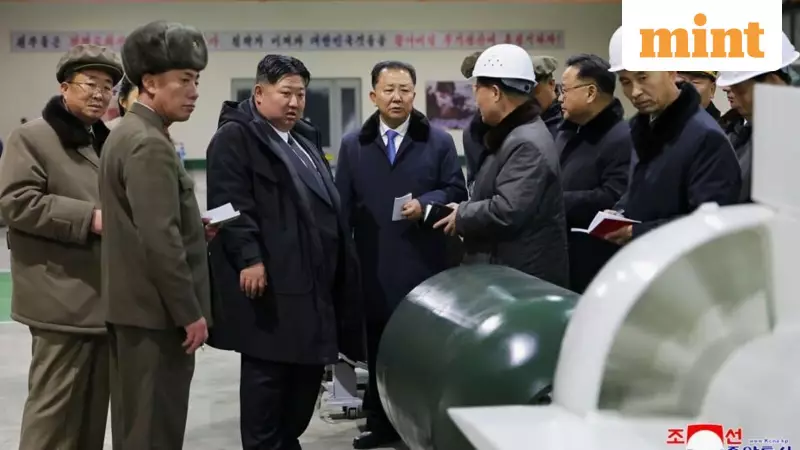
Beyond the original five nuclear states, the list of possessors has grown. India, Pakistan, Israel, and North Korea all remain outside the NPT framework. North Korea joined the treaty but later withdrew and now openly boasts of its expanding capabilities. Together, the nine nuclear states possess over 12,000 nuclear warheads, with about 4,000 deployed and 2,000 on high alert, ready to launch within minutes.
Chain Reaction: Deterrence Debates and a New Arms Race
Frustrated by the lack of disarmament progress, non-nuclear states championed the TPNW. However, nuclear powers have dismissed it, with the US, UK, and France arguing that nuclear deterrence has kept peace in Europe and North Asia for over 70 years. Meanwhile, the rhetoric from nuclear-armed states has become more brazen. Former Russian President Dmitry Medvedev has warned that a nuclear power's defeat in a conventional war could trigger a nuclear conflict.
This environment is causing allies to question security guarantees. In Japan and South Korea The failed cases of Iraq, Iran, and North Korea further illustrate the system's breakdown. Ukraine's experience—giving up its Soviet-era nuclear weapons in exchange for security assurances that proved worthless—stands as a cautionary tale for any nation seeking safety in a world where the bomb reigns supreme. All nine nuclear-weapon states are now "modernizing" their arsenals with new technologies, making them more diverse and potentially more vulnerable to cyber threats or miscalculation. The old arms-control regime, which accepted inherent inequalities, is unsustainable. As ElBaradei concludes, the world is being pushed to the edge of an abyss where more nations will seek their own "deterrence." The urgent need is for renewed dialogue, trust-building among major powers, and a reinvigorated commitment to a rules-based system. Without a concerted push for disarmament, the world risks sleepwalking into a conflict with civilization-ending consequences. The time for action is now, before the chain reaction of proliferation becomes irreversible.A Path Back from the Abyss






