NGT Bench in Bhopal Defines Environmental Mandate in Upper Lake Encroachment Case
The central bench of the National Green Tribunal (NGT) in Bhopal has made a clear distinction regarding its jurisdictional authority while hearing a petition concerning encroachments near the Upper Lake, specifically towards the Bhadbhada end. The tribunal emphasized that its primary mandate is to adjudicate matters related to environmental protection and conservation, rather than disputes over land title and ownership rights.
BMC's Action Taken Report Details Progress and Challenges
During the proceedings, counsel for the Bhopal Municipal Corporation (BMC), Gunjan Chowksey, presented an action taken report outlining the current status of encroachment removal efforts. According to the report, out of 35 identified encroachments in the sensitive area, authorities have successfully removed 9 structures. However, the removal of the remaining 26 encroachments is facing significant obstacles.
The primary challenges include:

- Resistance from local residents who oppose the removal actions
- Pending legal cases in competent courts regarding the right, title, and interest of parties involved in some of these encroachments
Critical Importance of Bhoj Wetland Ecosystem
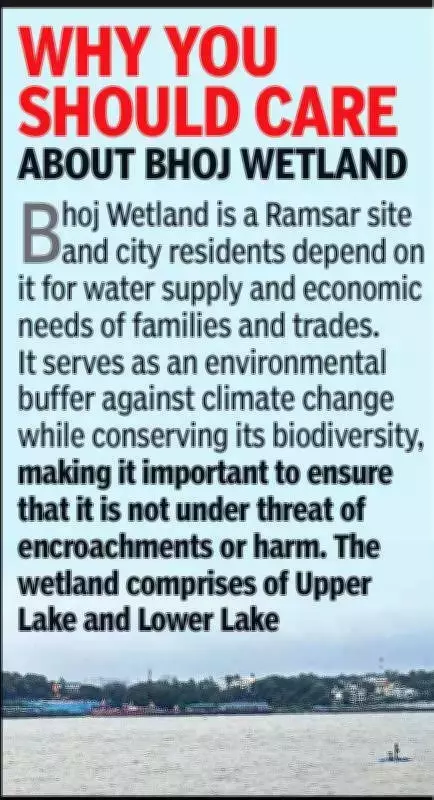
The Bhoj Wetland, which includes the Upper Lake, holds designation as a Ramsar site of international importance. This recognition underscores its ecological significance and the need for stringent protection measures. The wetland serves multiple crucial functions for Bhopal and its residents:
- It provides essential water supply for the city's population
- It acts as an environmental buffer against the impacts of climate change
- It fulfills various economic needs of the urban area
- It conserves valuable biodiversity that depends on this ecosystem
Given these vital roles, ensuring the wetland remains free from encroachments and other harmful activities becomes paramount for sustainable urban development and environmental conservation.
NGT's Judicial Position and Directions
The tribunal bench, comprising judicial member Justice Sheo Kumar Singh and expert member Sudhir Kumar Chaturvedi, reiterated that while their concern remains protecting the Bhoj Wetland from environmental harm, matters of land title and ownership rights fall within the purview of revenue courts. This clarification came as the bench directed the BMC to submit another comprehensive action taken report within two weeks to demonstrate further progress in addressing the encroachment issue.
Dharamvir Sharma, representing petitioner Aarya Shrivastava, argued that the NGT had previously directed concerned parties to approach revenue courts for determination of their land rights. Shrivastava, who filed the original petition in 2021 while a student at the National Law Institute University (NLIU), has been pursuing this environmental protection case for several years.
Legal Context and Previous Court Actions
Counsel for the state government, Prashant M Harne, along with BMC counsel Gunjan Chowksey, informed the tribunal that aggrieved violators and encroachers had previously approached the Madhya Pradesh High Court through several writ petitions. These petitions were dismissed with the opportunity for parties to submit relevant documents before revenue authorities to properly determine their rights, titles, and interests in the disputed lands.
The NGT has scheduled the next hearing in this ongoing environmental protection case for April 7, where further developments and the BMC's updated action taken report will be reviewed. This case highlights the complex interplay between environmental protection mandates, urban encroachment issues, and legal jurisdiction over land disputes in ecologically sensitive areas.