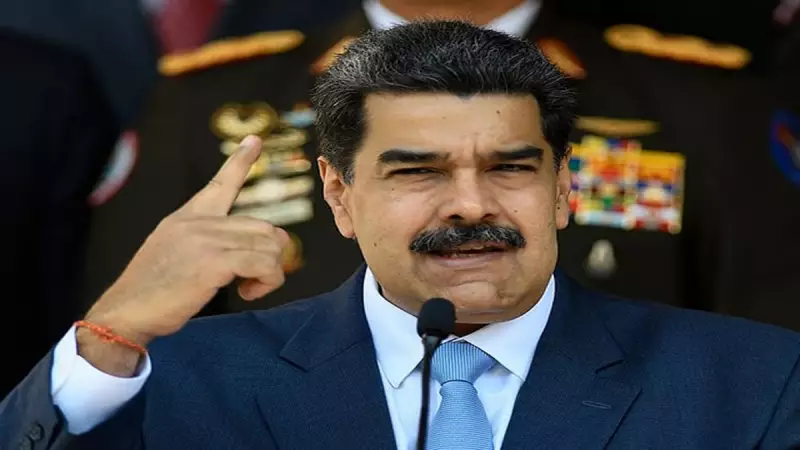
In a dramatic turn of events that has sent shockwaves through international diplomacy, former Venezuelan President Nicolas Maduro is now in the custody of United States authorities. This development follows years of escalating tensions between Washington and Caracas, culminating in a series of serious criminal charges against the socialist leader. The situation presents a complex legal and political puzzle with global ramifications.
The Charges and the Path to Custody
The legal basis for Maduro's detention stems from a March 2020 indictment issued by the United States Department of Justice. American prosecutors have charged Maduro and several of his associates with a litany of crimes, most notably narco-terrorism, corruption, and drug trafficking. The US government alleges that Maduro and his inner circle conspired with the FARC guerrilla group in Colombia to flood the United States with cocaine, using the proceeds to enrich themselves and prop up the Venezuelan regime.
The specific mechanism of how Maduro came into US custody remains a subject of intense speculation. While details are still emerging, experts suggest it likely involved cooperation from a third country or internal factions within Venezuela. His apprehension marks a significant escalation in the US campaign to pressure the Venezuelan government, which it has long labeled a dictatorship.

Legal Experts Analyze the Road Ahead
Legal scholars and international law experts are now dissecting the potential pathways for this unprecedented case. The immediate question is where Maduro will face trial. The US justice system is preparing to proceed, but the process is fraught with complications.
"This is not a straightforward criminal case," explains a professor of international law. "Maduro will claim head-of-state immunity, arguing that as the sitting president at the time of the alleged crimes, he is protected from prosecution in foreign courts. However, the US Department of Justice has explicitly rejected this immunity for leaders accused of what they deem 'universal crimes' like narcoterrorism."
The defense is expected to mount a vigorous challenge, potentially arguing that the charges are politically motivated. They may also seek to have evidence thrown out, questioning how it was obtained. The trial, if it proceeds in the US, promises to be a lengthy and highly contentious affair, drawing global attention to the American judicial system.
Global Repercussions and Diplomatic Fallout
The detention of Nicolas Maduro is more than a legal matter; it is a seismic event in international relations. Key allies of Venezuela, including Russia, China, Cuba, and Iran, have condemned the action. They are likely to frame it as an act of "illegal kidnapping" and a violation of international law and sovereignty.
Within Venezuela, the reaction is deeply polarized. Supporters of the opposition, led by figures like Juan Guaido (whom the US once recognized as interim president), view it as a long-overdue step toward justice. However, Maduro's supporters in the PSUV party and the military are expected to rally behind the narrative of foreign aggression, potentially leading to increased domestic instability.
The Biden administration now faces a delicate balancing act. While achieving a key foreign policy objective, it must manage the risk of retaliatory actions against American interests and diplomatic personnel abroad. Furthermore, it complicates any future negotiations with Caracas over issues like oil sanctions and migration.
The next steps are critical:

- Initial Court Appearance: Maduro will be brought before a federal judge, where the charges will be formally read, and bail will be considered (and likely denied).
- Pre-Trial Motions: A protracted phase of legal arguments over immunity, evidence, and jurisdiction.
- Diplomatic Maneuvering: Intense back-channel discussions between the US, Venezuela, and other global powers.
- Impact on Venezuela: The country must navigate a sudden leadership vacuum and potential power struggles within the ruling party.
In conclusion, the custody of Nicolas Maduro by the United States opens a new and uncertain chapter in hemispheric relations. It sets a bold precedent for holding foreign leaders accountable in American courts but at the cost of significant diplomatic turbulence. The world now watches closely as this high-stakes legal drama, poised at the intersection of law and geopolitics, begins to unfold. The final outcome could redefine the limits of international justice and state sovereignty for years to come.