India on Wednesday categorically stated that there is no role for any third parties in resolving the India-Nepal border issue. The Ministry of External Affairs (MEA) made this clear in response to remarks by Nepal's Prime Minister Balen Shah, who had sought the involvement of China and the United Kingdom in the matter.
MEA's Firm Stance
MEA spokesperson Arindam Bagchi said, 'Our position is very clear. The India-Nepal border issue is a bilateral matter. There is no role for any third party. We have conveyed this to the Nepalese side.' He added that India remains committed to resolving all outstanding issues through diplomatic channels and mutual dialogue.
Background of the Dispute
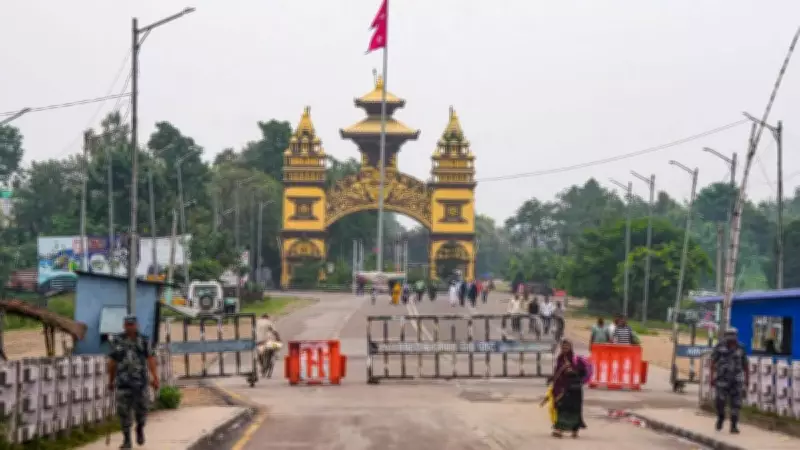
The border dispute between India and Nepal has been a long-standing issue, with both countries having differing claims over certain territories, including Kalapani, Lipulekh, and Limpiyadhura. The disagreement intensified in 2020 when Nepal released a new political map claiming these areas as its own, a move India rejected as 'unilateral' and not based on historical facts or evidence.

PM Balen Shah's Remarks
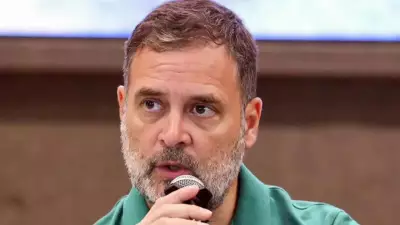
During a recent interview, Nepal's Prime Minister Balen Shah suggested that China and the UK could play a role in facilitating dialogue between India and Nepal. He argued that international mediation might help break the impasse. However, the MEA's response underscores India's consistent position that bilateral mechanisms are sufficient and that external involvement is unwelcome.
India's Bilateral Approach
India has always emphasized resolving disputes through bilateral consultations. The MEA spokesperson highlighted that both countries have established mechanisms, including the Joint Commission and the Boundary Working Group, to address border-related issues. 'We believe that these platforms are adequate for discussing and resolving any differences,' Bagchi said.
Reactions from Experts
Political analysts note that India's stance is in line with its broader foreign policy of opposing third-party intervention in bilateral matters. 'India has consistently maintained that all disputes, especially those involving territorial integrity, should be resolved bilaterally. This is a principle it applies not just to Nepal but to all its neighbors,' said Dr. S. D. Muni, a former diplomat and expert on South Asian affairs.
Future Prospects
While the border issue remains a sensitive topic, both nations have expressed a desire to maintain friendly relations. The MEA's statement reinforces the need for continued dialogue without external pressures. Observers believe that the upcoming bilateral meetings could provide an opportunity to de-escalate tensions and work towards a mutually acceptable solution.
In conclusion, India's rejection of third-party involvement in the India-Nepal border issue reaffirms its commitment to bilateralism. As the two countries navigate this complex issue, the focus remains on diplomatic engagement and respect for each other's sovereignty.