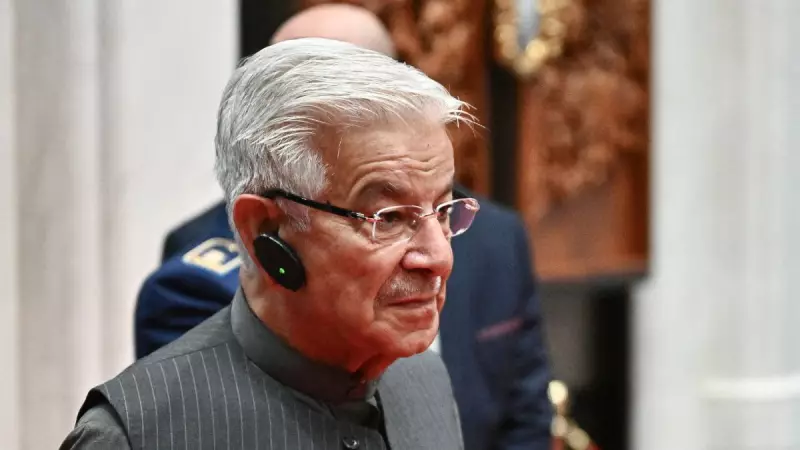
In a statement that has sent shockwaves through diplomatic circles, Pakistan's Defence Minister Khawaja Asif has suggested that the United States should consider kidnapping Israeli Prime Minister Benjamin Netanyahu. The controversial remark was made during a session of Pakistan's National Assembly on Tuesday, January 9, 2024.
Controversial Remarks in Pakistan's Parliament
Khawaja Asif, a senior leader of the Pakistan Muslim League-Nawaz (PML-N) and the country's Defence Minister, made the explosive comment while discussing the ongoing Israel-Hamas war in Gaza. He expressed deep frustration over the international community's perceived inaction and the escalating civilian casualties. Asif stated that if the United States was serious about peace, it had the capability to take extreme measures, even hinting that a country like Turkey could also undertake such an action.
The minister's words were not a formal policy proposal but a hyperbolic expression of anger aimed at highlighting the severity of the Gaza situation. He argued that the world had witnessed the abduction of individuals from other countries in the past, implying that similar tactics could be applied to Netanyahu to stop the war. The context of his speech was a broader condemnation of Israel's military operations and a critique of global powers for their stance on the conflict.

International Law and Diplomatic Fallout
The suggestion, even if made rhetorically, violates fundamental principles of international law and state sovereignty. The act of kidnapping a sitting head of government is considered a grave breach of the Vienna Convention on Diplomatic Relations and could be construed as an act of aggression. Unsurprisingly, the remarks have the potential to severely strain Pakistan's already delicate relations with several nations.
While Pakistan does not recognize Israel as a state and has been a vocal supporter of the Palestinian cause, such language from a high-ranking cabinet official is unprecedented. It places Pakistan's diplomatic corps in a challenging position, likely requiring damage control. The statement also risks overshadowing Pakistan's legitimate criticisms of the humanitarian crisis in Gaza by introducing an inflammatory and legally problematic narrative.
Reactions and Broader Implications
Immediate reactions within Pakistan were mixed, with some opposition lawmakers criticizing the Defence Minister for using undiplomatic language that could isolate the country. Experts in international relations have warned that such statements, even if made for domestic political consumption, can have real-world consequences for Pakistan's foreign policy and its standing on the global stage.
The incident underscores the intense global emotions surrounding the Gaza war. It also highlights how politicians in various countries are using strong, sometimes extreme, rhetoric to align themselves with public sentiment. For Pakistan, a nation grappling with significant economic and security challenges, the focus may now shift to managing the diplomatic reverberations from its Defence Minister's unexpected proposal.
Ultimately, Khawaja Asif's comments are more indicative of the deep global divisions over the Israel-Palestine issue than a feasible course of action. They reflect a growing sense of desperation and anger among many in the Muslim world regarding the prolonged conflict and the high number of Palestinian casualties. However, they also serve as a reminder of the importance of measured and responsible language in international discourse, especially from those in high office.