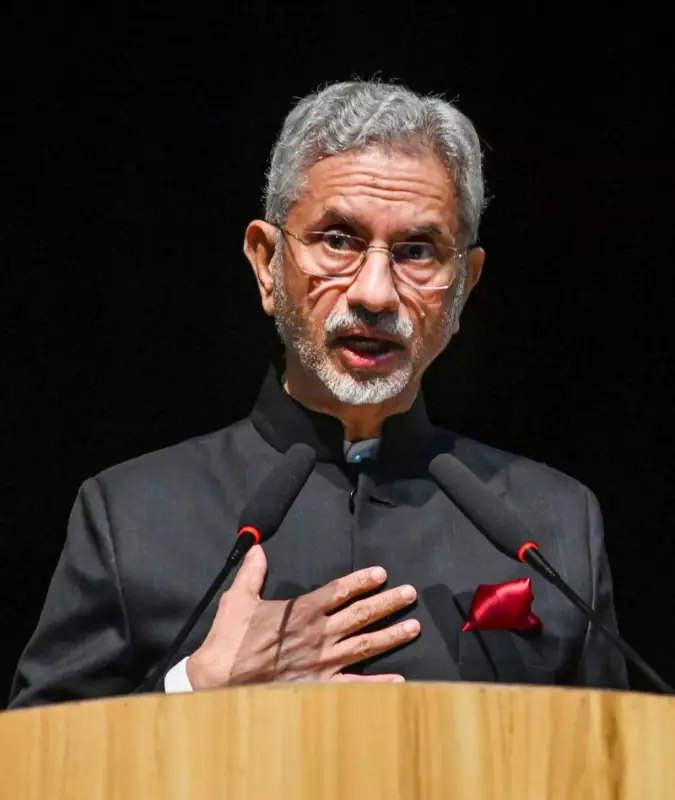
Pakistan's Foreign Office has issued a sharp rebuke to India's External Affairs Minister, Dr. S. Jaishankar, for his recent comments concerning Pakistan's internal political situation and its alleged links to terrorism. The criticism marks a fresh point of tension in the perpetually strained relations between the two neighbouring nations.
Jaishankar's Remarks Spark Diplomatic Ire
The controversy stems from remarks made by External Affairs Minister S. Jaishankar during a recent interaction. Jaishankar reportedly commented on the political instability within Pakistan, suggesting it had implications for the broader region. More pointedly, he reiterated longstanding Indian allegations that Pakistan serves as a hub for terrorism directed against India.
These statements did not sit well with authorities in Islamabad. A spokesperson for the Pakistani Ministry of Foreign Affairs formally responded, expressing strong disapproval. The official characterised Jaishankar's comments as "unwarranted" and "interfering" in Pakistan's domestic affairs. The core of Pakistan's objection lies in the perception that the Indian minister was overstepping diplomatic boundaries by commenting on another country's internal political landscape.

Pakistan's Counter-Arguments and Accusations
In its rebuttal, the Pakistani Foreign Office did not merely defend its position but launched a counter-offensive. The spokesperson turned the terrorism allegation back on India, accusing it of supporting terrorist activities inside Pakistan. This is a long-standing claim made by Pakistan, which often points to India's alleged involvement in destabilising its western regions.
Furthermore, the response touched upon the sensitive issue of Kashmir. The Pakistani official asserted that the primary obstacle to peace in South Asia is India's refusal to resolve the Jammu and Kashmir dispute in accordance with United Nations Security Council resolutions. By framing the conflict around Kashmir, Pakistan aimed to shift the diplomatic narrative from terrorism to what it views as an unresolved political and humanitarian issue.
Analysis of the Escalating Verbal Diplomacy
This exchange is the latest in a series of verbal skirmishes that define India-Pakistan relations. The use of strong language by both foreign offices indicates that diplomatic channels remain frosty, with little appetite for conciliatory dialogue in the near term. For India, under Jaishankar's stewardship, the foreign policy approach has been marked by a clear and direct articulation of security concerns, with Pakistan-centric terrorism being a central theme.
Pakistan's response follows a familiar pattern of denial and counter-accusation. The immediate and public nature of the criticism suggests that Islamabad is keen to project strength and reject any narrative that paints it as a politically unstable entity or a source of regional insecurity. This public diplomacy clash effectively halts any momentum for behind-the-scenes talks, ensuring that relations remain in a state of managed hostility.
The incident underscores a persistent reality: the India-Pakistan relationship remains trapped in a cycle of accusation and counter-accusation. While major diplomatic breakthroughs are absent, the battlefield has increasingly shifted to global forums and media statements, where each side seeks to justify its position and influence international opinion. The latest criticism from Pakistan's Foreign Office ensures that this cycle continues, with bilateral ties remaining a significant challenge for regional stability in South Asia.