

Pakistan Sets Tough Demands for Afghan Taliban to Resolve Border Tensions
Pakistan has formally demanded that Afghanistan's Taliban administration declare the Tehreek-e-Taliban Pakistan (TTP) a terrorist organization, dismantle its infrastructure, and provide verifiable proof of action as a precondition for resolving ongoing border tensions, according to a local media report. These three demands were conveyed during talks held last week in Urumqi, China, marking the first major diplomatic engagement since Islamabad launched Operation Ghazab lil-Haq in late February, targeting what it described as terrorist hideouts inside Afghanistan.
China Brokers First Major Engagement Since Cross-Border Strikes
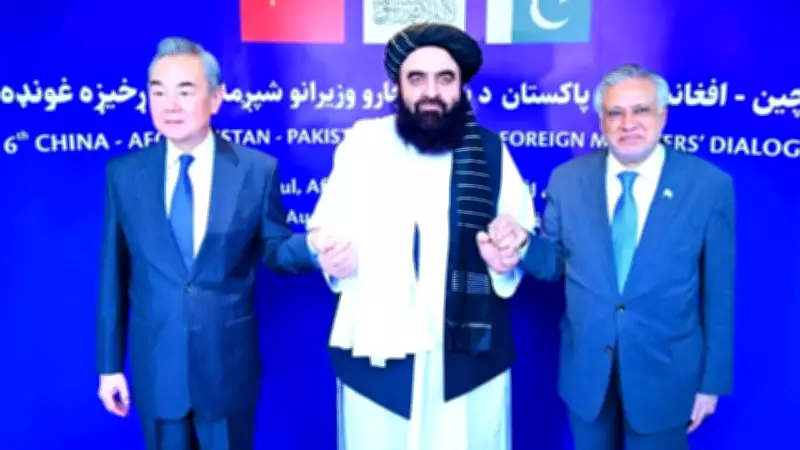
The Urumqi meeting represents a significant attempt to reopen dialogue after months of worsening ties between Islamabad and Kabul. This latest round was facilitated by China, which has been quietly pursuing shuttle diplomacy in recent months. Beijing's Special Envoy for Afghanistan, Yue Xiaoyong, has engaged separately with both capitals to narrow differences. Pakistan's foreign office has confirmed that talks are taking place in Urumqi, though it has released only limited details on the agenda and progress. Afghan Foreign Minister Amir Khan Muttaqi acknowledged on Sunday that discussions were still underway, stating the Taliban administration wants to resolve issues with Pakistan through dialogue.
Proposed Framework Includes Ceasefire, Anti-Terror Assurances, and Trade Routes
According to news agency PTI, a broader framework is now under discussion that could form the basis of a possible understanding between the two sides. The proposed roadmap reportedly includes a ceasefire arrangement, counter-terrorism assurances from the Afghan Taliban, dismantling of terror sanctuaries inside Afghanistan, and measures to facilitate secure trade routes. It also envisages a more structured and institutionalized dialogue mechanism between Islamabad and Kabul, suggesting both sides may be looking at a longer-term channel for managing tensions. Both countries have sent technical-level delegations to Urumqi, underlining the operational nature of the talks rather than a high-level political breakthrough at this stage.

Pakistan Says Talks Do Not Mean Policy Shift
Even as talks continue, Islamabad has sought to make clear that its participation should not be read as a softening of its stance. Pakistan Foreign Office spokesperson Tahir Andrabi said the dialogue did not signal any change in policy, especially with regard to ongoing security operations. "The way forward lies in continuing the dialogue process with the Afghan Taliban, with the involvement of friends such as China, to get firm assurances from Kabul that it will take visible and verifiable actions," he said, as quoted by PTI. Andrabi also stated at a recent weekly briefing, "There is no material change to ongoing Operation Ghazab Lil Haq that I mentioned last week." Pakistan has clarified that, for now, the talks are limited strictly to counter-terrorism and border security, with no broader political engagement on the table.
TTP Remains the Central Flashpoint
The talks come against the backdrop of months of rising friction between the neighbors, driven largely by Pakistan's repeated allegations that Afghanistan is allowing TTP and Balochistan Liberation Army (BLA) militants to operate from its soil. Islamabad has consistently accused Kabul of harboring anti-Pakistan militants, while the Taliban administration has denied the charge and instead urged Pakistan to address militancy within its own borders. The Taliban have now reportedly agreed to discuss a "verifiable mechanism" to address Pakistan's concerns over the TTP. This could be a key test of whether the Urumqi process can produce anything concrete, especially as Pakistan has insisted not just on commitments but on measurable and visible action.

China's Own Security Concerns Add Weight to Talks
The choice of Urumqi as the venue is being seen as more than symbolic. China has its own long-standing concerns about militancy linked to the East Turkestan Islamic Movement (ETIM), whose fighters are believed to have a presence in Afghanistan. China is said to have raised ETIM-related concerns during the discussions as well, which gives Beijing a direct security stake in reducing instability along the Pakistan-Afghanistan axis. Chinese officials are believed to be holding separate meetings with both sides before pushing them towards more structured direct negotiations.
Trade Routes and Economic Ties Could Be Part of Confidence-Building
While the talks remain security-focused, there are signs that some limited confidence-building measures may also be under consideration. Pakistan is weighing an Afghan request to reopen trade routes and resume economic cooperation, which could help build trust if progress is made on the security front. "The focus is on addressing Islamabad's concerns over terrorist groups operating from Afghan territory and ensuring mechanisms to prevent cross-border attacks," an official was quoted as saying by PTI. That suggests any economic relief or reopening of routes is likely to be tied closely to whether Kabul can satisfy Pakistan's core demand on militant groups.
No Breakthrough Yet, but Talks Seen as Significant
So far, there has been no breakthrough in the discussions. However, officials said the fact that both sides are talking at all is an important step after months of military escalation and public recrimination. "Although no breakthrough has been achieved in Urumqi so far, but both sides are at least talking which is significant and this process should be taken forward," a government official said, as cited by The Express Tribune. The engagement underscores a critical diplomatic effort to de-escalate tensions and address security challenges in the region.





