

Pakistan Issues Strong Rejection of India's Delimitation Bill for Jammu & Kashmir
In a significant diplomatic development, Pakistan has formally responded to India's recent legislative move concerning Jammu and Kashmir. The reaction comes just one day after the Modi government introduced the Delimitation Bill 2026 in Parliament, establishing a legal framework for constituencies that includes areas referred to as Pakistan-occupied Jammu and Kashmir.
Official Statement from Pakistan's Foreign Ministry
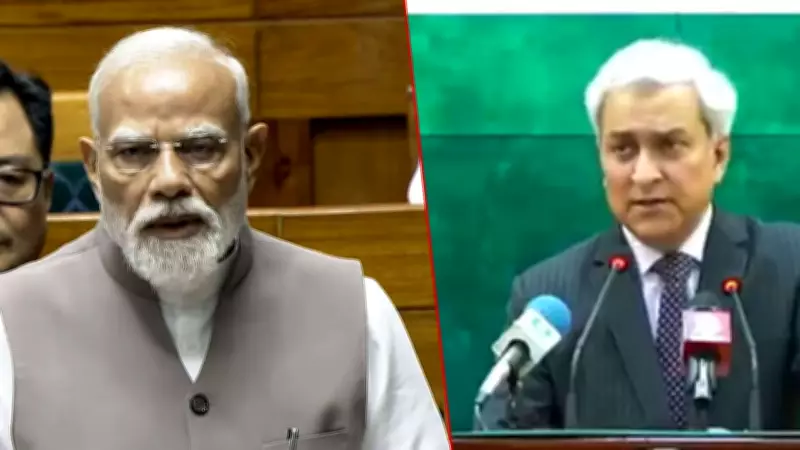
Pakistan's Foreign Ministry spokesperson, Tahir Andrabi, addressed media reports regarding the bill during an official briefing. Andrabi stated that Pakistan has taken note of the legislation and categorically rejects India's delimitation process in Jammu and Kashmir. He emphasized that Pakistan views this exercise as having no legal standing and being driven by political motivations rather than legitimate governance concerns.
"We have seen the media reports about this bill," Andrabi declared. "Pakistan rejects India's delimitation process in Jammu and Kashmir. This exercise is illegal, politically motivated, and without any legal value."

Disputed Territory and Demographic Concerns
The spokesperson elaborated on Pakistan's position by highlighting the core issue of territorial dispute. According to Andrabi, the delimitation process relates to what Pakistan considers a disputed territory, and the bill's provisions are aimed at altering the demographic and political structure of the region.
This strong condemnation underscores the ongoing tensions between the two neighboring nations over the status of Jammu and Kashmir, a region that has been a point of contention since the partition of the Indian subcontinent. The introduction of the Delimitation Bill 2026 has now added a new layer to this complex geopolitical landscape, prompting immediate diplomatic repercussions from Islamabad.
The bill's inclusion of constituencies in Pakistan-occupied Jammu and Kashmir represents a bold legislative step by India, asserting its administrative claims over the entire region. Pakistan's response, framed in terms of legality and political intent, reflects its consistent stance on the Kashmir issue and signals potential for further diplomatic exchanges or tensions in the coming days.
As both countries navigate this latest development, the international community watches closely, aware of the historical sensitivities and strategic implications involved. The Delimitation Bill 2026 has clearly struck a nerve in Pakistan's foreign policy apparatus, leading to a swift and unequivocal rejection that reaffirms existing positions on the disputed territory.






