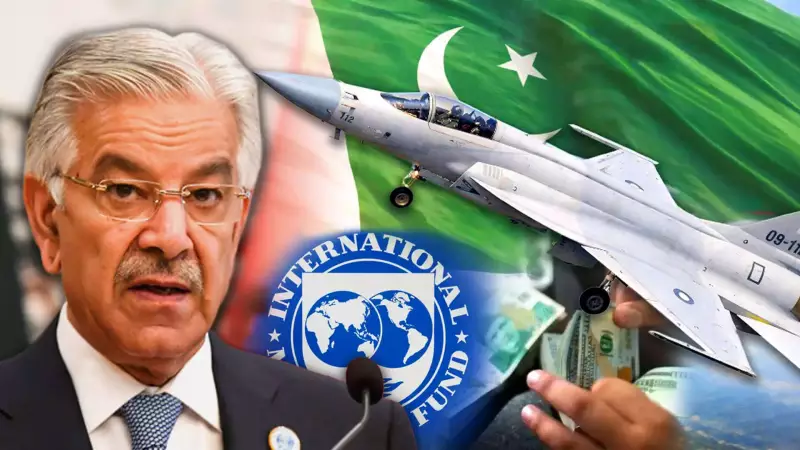
In the aftermath of the military action known as Operation Sindoor, a bold assertion from Pakistan's defence minister has collided head-on with the hard numbers of economic reality. The minister projected that surging fighter jet exports would liberate the nation from International Monetary Fund (IMF) bailouts within a mere six months. However, a closer examination by experts, scrutiny of financial data, and even assessments from within Pakistan paint a picture where ambition wildly outstrips arithmetic.
The Booming Jet Sale Claim vs. The Financial Fine Print
The central pillar of the minister's optimistic forecast rests on the international sales of the JF-17 Thunder fighter jet, a joint venture with China. The claim suggests that revenue from these exports would be substantial enough to offset Pakistan's crippling external debt and negate the need for further IMF assistance. This narrative, however, quickly unravels under scrutiny. Analysts point out that Pakistan's revenue share from the JF-17 programme is significantly limited, as a large portion of the components and intellectual property are Chinese. The actual financial inflow to Pakistan's national exchequer from each jet sold is a fraction of the total contract value.
This comes against a backdrop of a severe economic crisis. Pakistan's public debt remains massive, consuming a huge portion of its annual budget in repayments. The country's foreign exchange reserves are perilously low, and inflation has severely impacted its citizens. A stark indicator of the state's financial distress is the recent, forced privatisation of the national carrier, Pakistan International Airlines (PIA). Such a move is typically a measure of last resort to generate emergency funds and meet conditions set by international lenders, not the action of a nation on the cusp of financial independence.

Operation Sindoor: A Military and Economic Exposé
The timing of the minister's statement is notable, following closely on the heels of Operation Sindoor, conducted by India in early January 2026. While the precise details of the operation remain in the strategic domain, reports indicate it involved a precise military response to terrorism. The operation's success, as noted by analysts, did more than demonstrate tactical capability. It inadvertently highlighted the fragility of Pakistan's economic and security infrastructure. The suggestion is that the event exposed not just vulnerabilities in air defence but also the underlying economic weakness that limits a state's capacity for long-term strategic resilience.
Pakistani analysts and economists have been among the first to question the defence minister's six-month timeline. They argue that even under the most optimistic scenarios for defence exports, the revenue generated would be a drop in the ocean compared to the billions of dollars needed to service existing debt and fund essential imports. The structural issues plaguing Pakistan's economy—including a narrow tax base, energy shortages, and political instability—require deep, sustained reform, not a windfall from a single sector.
Ambition vs. Arithmetic in Global Geopolitics
The episode serves as a potent case study in contemporary geopolitics. While national ambition and positive rhetoric are important for morale and international standing, they ultimately bow to unforgiving arithmetic. The gap between the claim of IMF freedom in six months and the reality of forced asset sales and ongoing debt negotiations is simply too vast to ignore. The international community, particularly financial institutions and investors, base decisions on data, credit ratings, and fiscal discipline, not on aspirational statements.
For India, the situation underscores a complex dynamic with its neighbour. The precision of Operation Sindoor brought one form of vulnerability to light, while the subsequent economic claims and their swift debunking have revealed another. It reinforces the understanding that national security is inextricably linked to economic stability. A state grappling with fundamental economic challenges finds its strategic options and its narrative-shaping power significantly constrained. In the high-stakes calculus of South Asian geopolitics, sustainable economic strength continues to be the ultimate determinant of long-term influence and stability.