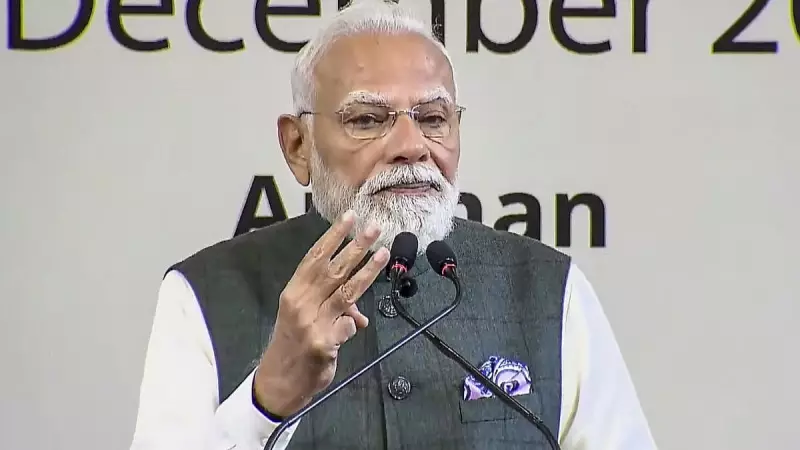
Prime Minister Narendra Modi has wrapped up a significant diplomatic engagement in Jordan, highlighting concrete outcomes that have broadened the partnership between the two nations. The visit, which took place on Monday, December 16, 2025, marked a pivotal step in strengthening India's ties with the Middle Eastern kingdom.
A Strategic Stop in Amman
Prime Minister Modi arrived in Jordan's capital, Amman, on Monday for a two-day official visit. This trip was conducted at the personal invitation of King Abdullah II bin Al-Hussein. Jordan served as the first destination on the Prime Minister's extensive four-day, three-nation tour, which is also scheduled to include Ethiopia and Oman.
The discussions between the Indian leader and the Jordanian monarch were described as warm and forward-looking. Both sides engaged in comprehensive talks aimed at identifying new avenues for collaboration. The visit on December 16-17 has successfully expanded bilateral ties across several crucial sectors, including trade, security, and cultural exchange, though specific agreements were not detailed in the initial briefing.

Broadening the Horizon of Cooperation
While the official statement emphasized "substantive outcomes," the focus was on building a more robust and multi-faceted relationship. Analysts suggest that the talks likely covered areas of mutual interest such as counter-terrorism, economic investments, pharmaceuticals, and information technology. Jordan's strategic location and stability make it a key partner for India in the region.
This high-level engagement underscores India's active and growing diplomatic footprint in the Middle East. The Prime Minister's visit is seen as a continuation of India's 'Link West' policy, which seeks to deepen economic and strategic connections with West Asian nations.
Onward to Ethiopia and Oman
Following the successful leg in Jordan, Prime Minister Modi will proceed to the next phases of his tour. The itinerary includes Ethiopia and Oman, indicating a balanced diplomatic outreach covering Africa and the Arabian Peninsula. Each stop is expected to address unique bilateral agendas while reinforcing India's role as a reliable global partner.
The Ethiopia visit will focus on bolstering development partnerships and trade, while the Oman stop is anticipated to center on energy security, maritime cooperation, and the welfare of the large Indian diaspora. This three-nation tour, condensed into four days, demonstrates the government's focused approach to foreign policy and economic diplomacy.
In summary, Prime Minister Narendra Modi's visit to Jordan has set a positive tone for his wider tour, yielding tangible progress in India-Jordan relations. The expanded cooperation across key sectors promises to bring long-term benefits for both countries, reinforcing a partnership built on shared interests and mutual respect.