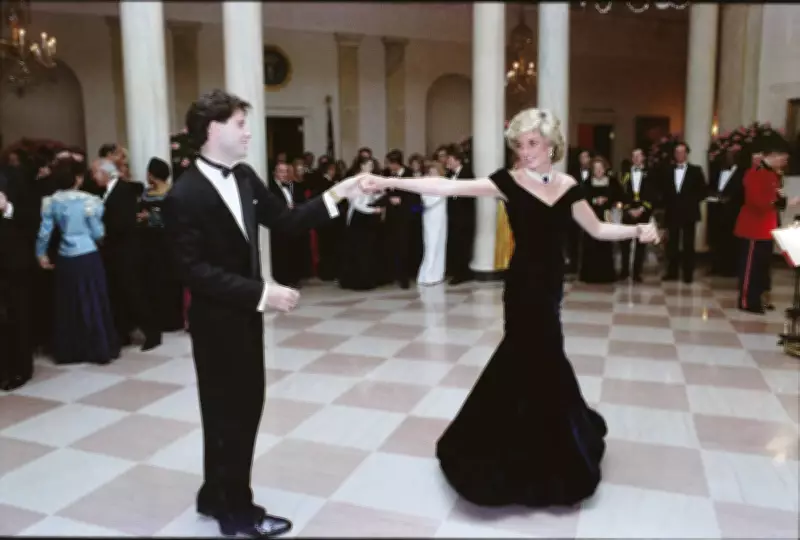
As Princess Diana walked the floors of the Cross Hall beneath the ballroom chandeliers, she became part of a memorable occasion that would serve as a symbol of diplomacy in the 1980s. During her official state visit to the United States, this particular moment drew global attention, offering a fresh perspective on what a state visit could entail. Unlike typical official appearances marked by rigid reception lines, this was an informal event at the executive mansion.
This moment has become a well-known landmark from the 1985 tour, illustrating the public's response to Princess Diana at official functions. The trip to Washington, alongside Prince Charles, was notable, but the evening reception received the most attention. By actively participating in the social activities at the end of the evening among other guests, the Princess of Wales demonstrated her ability to navigate both the formal aspects of the British monarchy and the high-profile nature of an American state dinner. The image captured was not merely a reflection of an ordinary party; it became one of the defining symbols of the princess's public life.
Practical Measures Taken to Organise the Evening Dance
The background of the picture includes a carefully arranged set of actions by the hosts of the state dinner. According to the official schedule recorded in the Daily Diary of President Ronald Reagan, the formal event on November 9, 1985, was planned to mark the arrival of the Prince and Princess of Wales at the White House. The evening included a formal dinner and a musical performance, allowing guests to socialize after the toasts concluded. Recognizing her guest's interests, First Lady Nancy Reagan facilitated the introduction by approaching American actor John Travolta and suggesting he invite the princess to the dance floor. As documented in the historical record compiled by the Ronald Reagan Presidential Library titled "Dinner and Dancing with Prince Charles and Princess Diana," the actor approached the royal visitor around midnight to request a dance. Princess Diana accepted, and the two stepped onto the floor as the orchestra performed selections from his film soundtracks. Prince Charles, Princess Diana, President Reagan, and Nancy Reagan had a photo opportunity at the Grand Staircase.

They danced for about fifteen minutes, providing a distinct visual sequence for the press covering the event. Dressed in a midnight-blue velvet evening dress by Victor Edelstein and wearing a sapphire and pearl choker, the princess maintained her relaxed demeanor throughout. This meeting was witnessed by numerous diplomats, politicians, and entertainment industry figures, representing a crossing between British state diplomacy and contemporary American popular culture.
Blending State Representation and Public Attractiveness
The long-lasting recognition of the photo relates to its role as an easily comprehensible image reflecting a major state event. The photograph remains memorable for its ability to represent spontaneous interactions rather than meticulously planned official portraits. It is argued that the photo helped observers see another side of the international trip of a well-known state figure. A look at the history of the dance at the White House shows that a single event can leave a lasting impression on the memory of a diplomatic occasion. By engaging in the social activities of the evening in a friendly way, Princess Diana created a moment to remember about her presence at the diplomatic event through modern representation.