

Putin Issues Stark Warning on Global Energy Crisis Amid Middle East Conflict
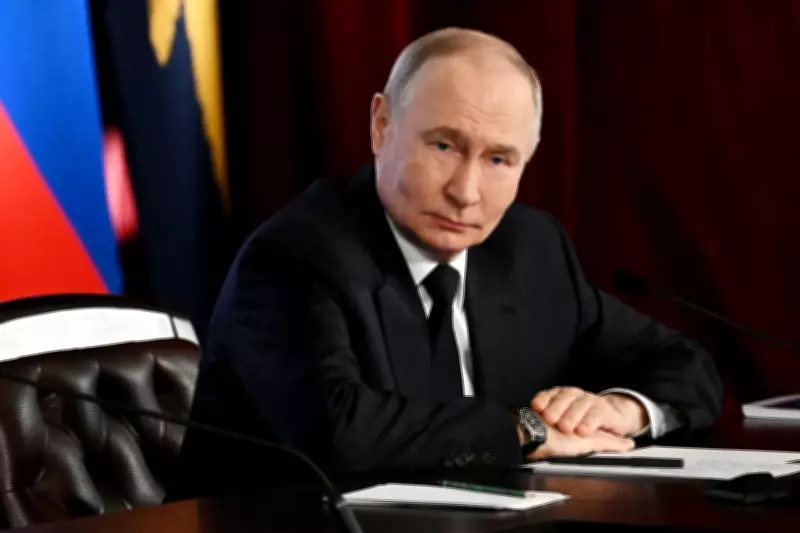
Russian President Vladimir Putin delivered a grave warning on Monday, stating that the ongoing US-Israeli military actions against Iran have plunged global energy markets into a severe crisis. During a televised meeting with senior government officials and executives from Russia's major oil and gas companies, Putin emphasized that oil flows dependent on the strategic Strait of Hormuz could face a complete shutdown in the coming weeks.
Immediate Threats to Global Oil Supply
Putin highlighted that the situation in the Middle East has already begun disrupting global supplies, causing oil prices to surge sharply and posing broader economic risks. Oil prices recently climbed past $100 per barrel, reaching their highest levels since 2022. This spike follows the effective closure of the Strait of Hormuz due to the war involving Iran. This narrow waterway is critically important, responsible for transporting approximately one-fifth of the world's oil and liquefied natural gas supplies.
"Oil production dependent on the Strait of Hormuz risks halting completely within the next month. It has already begun to decline, and storage facilities in the region are filling with oil that cannot be transported, is extremely difficult to transport, or is extremely expensive to transport," Putin stated, as cited by Reuters.

Russia's Position and Market Opportunities
Putin noted that Russia, as the world's second-largest oil exporter and holder of the biggest natural gas reserves, could potentially benefit from the current turbulent market conditions. He urged Moscow's energy companies to prepare to capitalize on these developments. However, he cautioned that the recent oil price spike might prove temporary. It is important to note that oil and gas revenues constitute about a quarter of Russia's federal budget income.
The Russian leader reiterated that Moscow had long warned that instability in the Middle East could trigger serious disruptions in global energy markets, and such a scenario now appears to be unfolding.
Openness to European Energy Cooperation
In a significant diplomatic overture, Putin expressed Russia's willingness to rebuild energy ties with European nations if they signal interest in restoring long-term cooperation. "We're ready to work with Europeans too. But we need some signals from them that they're ready and willing to work with us and will ensure this sustainability and stability," Putin said.
This offer comes despite a substantial reduction in European dependence on Russian oil and gas since Moscow's invasion of Ukraine. Over the past four years, Western governments, including the European Union and the G7, have imposed sanctions and actively worked to cut reliance on Russian energy supplies.
Impact of European Shift Away from Russian Energy
The shift has been costly for Russia. Europe was previously one of Moscow's most profitable markets, and the loss of that demand has forced Russian producers to sell oil and gas to Asian buyers at significant discounts. Before the Ukraine war, more than 40% of Europe's gas imports came from Russia. By 2025, however, Russian pipeline gas and liquefied natural gas together accounted for only 13% of the European Union's total imports.
In response, Putin recently instructed the Russian government to examine the possibility of diverting remaining energy flows away from Europe ahead of the EU's plan to completely ban Russian fossil fuel imports.
International Response and G7 Stance
Meanwhile, the Group of Seven (G7) countries stated on Monday that they are prepared to take "necessary measures" to address rising global oil prices, although they stopped short of announcing the release of emergency reserves. This indicates a cautious approach as the international community monitors the escalating tensions in West Asia.
The conflict has already had tangible effects beyond energy markets, with reports of disruptions to commercial LPG supply in Indian cities like Bengaluru, Mumbai, and Kolkata, and attacks such as the UAE embassy in Iraq being targeted.






