

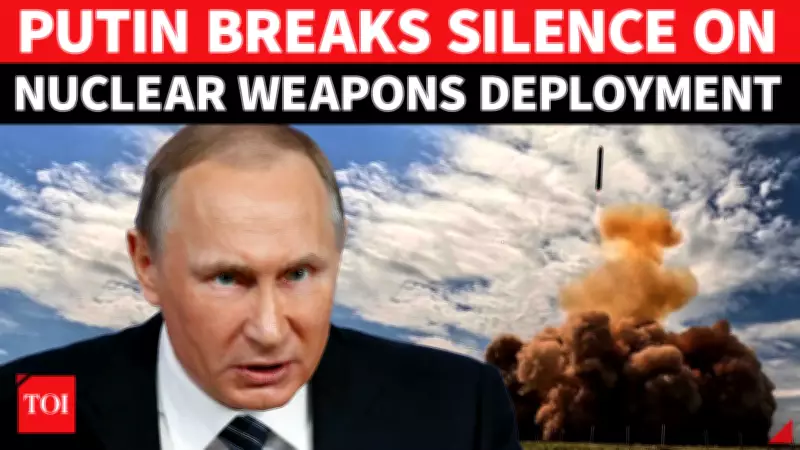
In a nationally televised address following the conclusion of massive joint nuclear drills between Russia and Belarus, President Vladimir Putin declared that the use of nuclear weapons remains an 'exceptional measure' for his country. However, he emphasized that these weapons continue to serve as a critical guarantee for the security of the Russia-Belarus Union State, especially in the face of escalating global tensions.
Putin's Address Highlights Nuclear Deterrence
The Russian leader's remarks came as the military exercises, which involved thousands of troops, missile systems, and nuclear-capable bombers, wrapped up near the borders of NATO member states. Putin stressed that while Russia does not seek conflict, it must be prepared to defend its sovereignty and that of its allies. 'Nuclear weapons are a last resort, but they are an indispensable tool for ensuring our security in a rapidly changing world,' he stated.
Rising Tensions with NATO
The drills have heightened concerns among Western nations, particularly those in Eastern Europe. NATO has condemned the exercises as provocative, with some member states calling for increased defense spending and troop deployments along the alliance's eastern flank. Putin's address aimed to reassure Russian citizens while sending a clear message to the West: Russia will not back down in the face of perceived threats.

Analysts note that the timing of the address is significant, as it follows a series of diplomatic clashes between Moscow and Washington over issues ranging from arms control to regional conflicts. The Kremlin has repeatedly accused NATO of encroaching on its sphere of influence, a charge the alliance denies.
International Reactions
The international community has reacted with caution. United Nations Secretary-General António Guterres called for restraint, urging all parties to avoid rhetoric that could escalate into a full-blown crisis. Meanwhile, the European Union issued a statement expressing deep concern over the military buildup near its borders and reaffirmed its commitment to collective defense under NATO.
Putin's address also comes amid reports of internal discord within the Trump administration over potential military action against Iran, as well as ongoing conflicts in Ukraine and the Middle East. The Russian president's firm stance on nuclear deterrence is seen as part of a broader strategy to project strength on the global stage.
Domestic Implications
At home, Putin's message resonated with many Russians who view NATO expansion as a direct threat. State media outlets have amplified the president's warnings, framing the drills as a necessary response to Western aggression. However, some independent analysts caution that the rhetoric could further isolate Russia economically and diplomatically.
As the world watches these developments, the delicate balance of power between nuclear-armed states remains a central concern. Putin's address underscores the enduring role of nuclear weapons in international security, even as calls for disarmament grow louder.






