

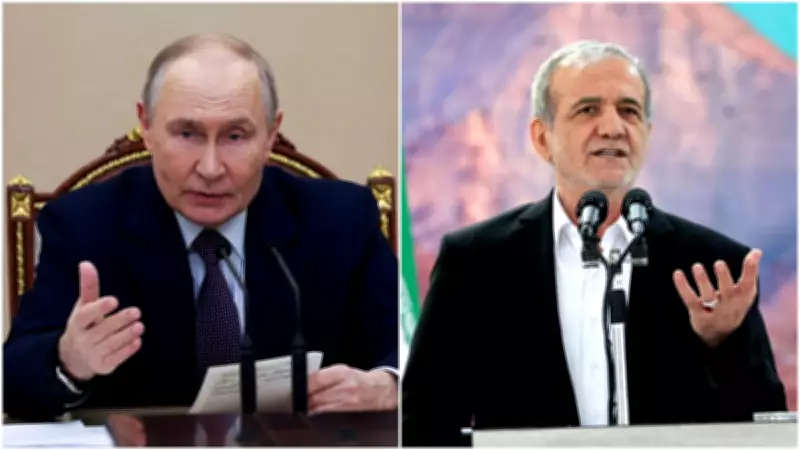
Putin Advocates for Immediate De-escalation in West Asia During Call with Iranian Leader
In a significant diplomatic move, Russian President Vladimir Putin has called for a rapid de-escalation of tensions in West Asia during a phone conversation with Iranian President Masoud Pezeshkian. This high-level discussion comes at a critical juncture, as the region grapples with a dangerous cycle of retaliatory strikes involving the United States, Israel, and Iran, which have also impacted neighboring Gulf nations.
Timing and Context of the Diplomatic Exchange
The call between Putin and Pezeshkian was initiated amidst escalating hostilities that threaten regional stability. According to reports, the dialogue focused on the urgent need to reduce tensions and prevent further military confrontations. The timing is particularly noteworthy, as it follows a series of recent strikes and counter-strikes that have raised fears of a broader conflict.
This diplomatic engagement underscores Russia's ongoing role as a key player in Middle Eastern affairs, seeking to mediate and influence outcomes in a volatile geopolitical landscape.

Key Issues Discussed: Regional Security and Retaliatory Strikes
During their conversation, Putin and Pezeshkian addressed the complex security dynamics in West Asia, with a specific emphasis on:
- The cycle of retaliatory actions between Iran, the US, and Israel.
- The spillover effects on Gulf nations, which have faced collateral damage from these strikes.
- Strategies for de-escalation to avoid further humanitarian and economic repercussions.
Putin's call for swift de-escalation highlights concerns over the potential for these skirmishes to escalate into a full-scale regional war, which could have global implications.
Implications for International Relations
This development has several important implications:
- Diplomatic Leverage: Russia's intervention may position it as a mediator, potentially increasing its influence in West Asia amid ongoing rivalries with Western powers.
- Regional Stability: A successful de-escalation could help stabilize the region, benefiting Gulf nations that have been adversely affected by the conflict.
- Global Security: Reducing tensions in West Asia is crucial for international security, given the area's strategic importance in global energy and trade routes.
The call reflects broader efforts by global powers to manage conflicts in West Asia, with Russia actively engaging to shape outcomes in line with its foreign policy objectives.
Looking Ahead: Prospects for Peace and De-escalation
While Putin's appeal for de-escalation is a positive step, the path to peace remains fraught with challenges. The deep-seated animosities and strategic interests of the involved parties—Iran, the US, and Israel—complicate efforts to achieve a lasting resolution. However, this diplomatic outreach could pave the way for further negotiations or multilateral talks aimed at reducing hostilities.
As the situation evolves, the international community will be closely monitoring whether this call leads to tangible reductions in violence or serves as a precursor to more intensive diplomatic initiatives. For now, Putin's message underscores the urgent need for dialogue over confrontation in one of the world's most volatile regions.






