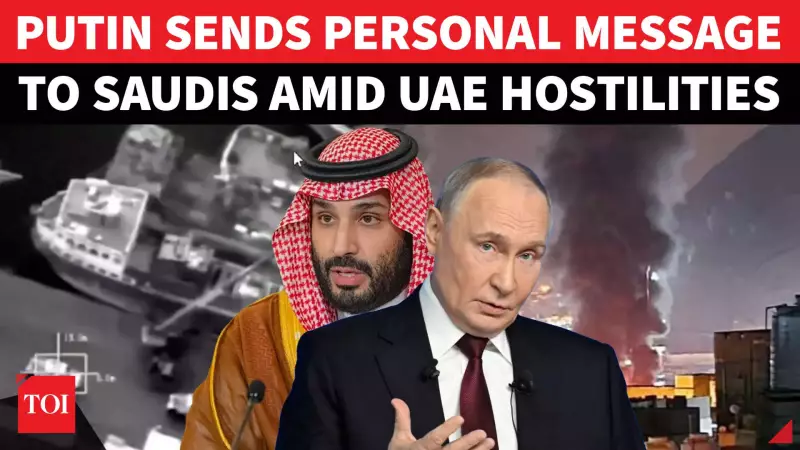
In a significant diplomatic move, Russian President Vladimir Putin has extended New Year greetings to Saudi Crown Prince Mohammed bin Salman. This gesture comes at a critical juncture, as relations between Saudi Arabia and the United Arab Emirates have sharply deteriorated following a military incident in Yemen.
Yemen Strikes Trigger Gulf Rift
The backdrop to Putin's outreach is a serious escalation in the long-running Yemen conflict. On or around December 31, 2025, Saudi Arabia conducted targeted airstrikes on the port of Mukalla in Yemen. The strikes were a direct response to the arrival of a weapons shipment, allegedly originating from the United Arab Emirates, intended for separatist forces within the war-torn nation.
Riyadh did not mince words in its condemnation of the Emirati action. Saudi authorities issued a stern warning, explicitly stating that they viewed the UAE's involvement as "extremely dangerous." This public rebuke marks one of the most visible fractures in the Gulf Cooperation Council alliance, which has historically presented a united front, particularly in the Yemeni conflict against Houthi rebels.

Putin's Diplomatic Gambit
President Putin's message to Crown Prince Mohammed bin Salman, sent just days after the Mukalla port incident, is being closely watched by geopolitical analysts. The timing suggests a potential Russian interest in mediating or at least capitalising on the growing rift between two of the Middle East's most powerful US-aligned nations.
While the exact content of the New Year message has not been fully disclosed, its public acknowledgment serves to highlight Russia's sustained diplomatic engagement in the region. Putin has consistently sought to strengthen ties with major oil producers like Saudi Arabia, positioning Russia as an alternative power broker amidst shifting global alliances.
Broader Implications for Regional Stability
The fallout from the Mukalla incident and the subsequent Saudi warning to the UAE has several immediate consequences:
- Yemen War Dynamics: The conflict, already a humanitarian catastrophe, faces further complication as former allies now clash over support for different local factions.
- GCC Unity: The public disagreement challenges the cohesion of the Gulf bloc, potentially altering its collective foreign policy and security posture.
- Power Vacuum: The tension creates an opening for other global powers, like Russia, to increase their influence in the Gulf, traditionally a sphere of strong American influence.
The situation remains fluid. The question of whether Vladimir Putin is actively mediating to resolve the Saudi-Emirati tensions, or is simply reinforcing a strategic partnership with Riyadh, underscores the complex and multi-layered nature of modern Middle Eastern geopolitics. This development signals that the Yemen war's ramifications are extending far beyond its borders, reshaping alliances and creating new diplomatic opportunities for external players.