Why Putin's Strategy Benefits from U.S.-NATO Tensions Over Greenland
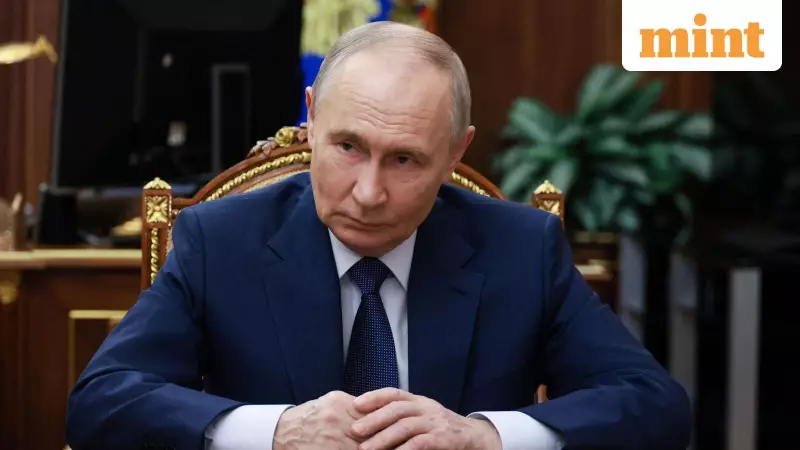
Russian President Vladimir Putin has consistently viewed the North Atlantic Treaty Organization (NATO) as Russia's "main opponent" since his early days in the KGB. This perspective has shaped his foreign policy, with a clear objective to weaken the Western alliance that has stood as a bulwark against Russian expansionism.
The Historical Context of Russian Opposition to NATO
Since NATO's founding in 1949, successive Soviet and Russian leaders have sought to undermine the alliance and drive a wedge between the United States and Europe. The Soviet Union established the Warsaw Treaty Organization in 1955 as a counterbalance, though it was marked by internal conflicts, including Soviet invasions of Hungary in 1956 and Czechoslovakia in 1968 to maintain control over Eastern Europe.
After the Soviet Union dissolved in 1991, debates emerged about NATO's relevance in a post-Cold War world. While some advocated for a new European security framework including Russia, NATO instead expanded to include former Warsaw Pact states, a move that deepened Russian suspicions. The 1997 NATO-Russia Founding Act did little to ease tensions, as Russia remained unwilling to join an alliance it could not dominate.

Putin's Modern Strategy to Weaken NATO
Under Putin's leadership, Russia has actively worked to destabilize NATO through various means. The Kremlin has supported European political parties across the spectrum that oppose NATO and U.S. influence. Putin justified the 2014 annexation of Crimea by claiming it prevented NATO from establishing a presence in what he called "Russia's city of military glory."
Putin's primary concern is not NATO's direct military threat to Russian territory, but rather how NATO expansion undermines his goal of re-establishing Russia's sphere of influence in former Soviet states. The alliance remains the chief obstacle to Putin's imperial ambitions, as demonstrated by the fact that Russia would not have invaded Ukraine had it been a NATO member.
The Greenland Dispute: An Unexpected Opportunity for Russia
Recent tensions between the U.S. and its allies over Greenland's future have presented Putin with an unexpected opportunity. The confrontation threatens to damage NATO's cohesion in ways that decades of Russian efforts have failed to achieve. The visible rift between the U.S. and its European partners reinforces Putin's belief that the trans-Atlantic alliance is seriously weakened.
Russian Foreign Minister Sergei Lavrov highlighted the significance of this development, noting that it creates a scenario where "one NATO member is going to attack another NATO member." This echoes historical precedents where Warsaw Pact members invaded each other, underscoring how internal NATO conflicts could play into Russian hands.
The Irony of Current Geopolitical Dynamics
It is particularly ironic that a dispute over territory of a NATO member could ultimately weaken the alliance and help Putin advance his goal of subjugating Ukraine. Without lifting a finger, Russia appears poised to benefit from divisions within its main opponent. This situation demonstrates how Putin's long-term strategy of sowing discord within NATO aligns with current geopolitical tensions.
The ongoing situation serves as a reminder that Putin's mission to weaken NATO remains unchanged since his early political career, and current international disputes may inadvertently advance Russian interests.