

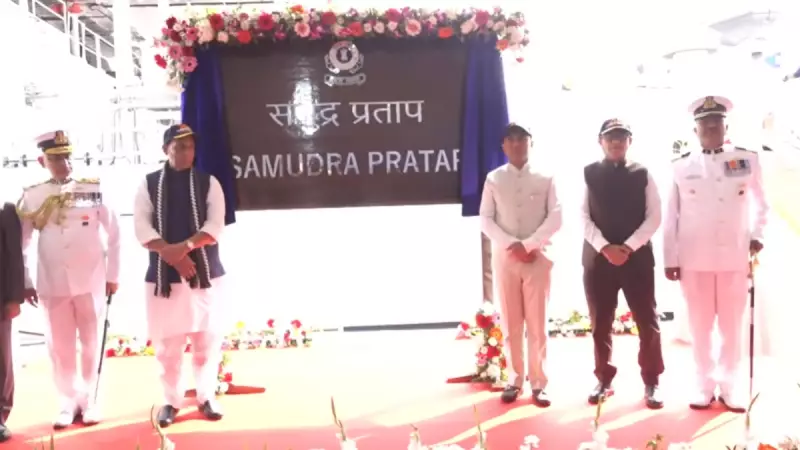
In a significant boost to India's maritime security and environmental protection infrastructure, Defence Minister Rajnath Singh commissioned the Indian Coast Guard Ship (ICGS) Samudra Pratap in Goa on Sunday, January 5, 2026. The advanced pollution control vessel marks a crucial addition to the nation's coastal defence fleet, strengthening its ability to safeguard maritime interests and respond to ecological threats.
A New Guardian for India's Maritime Zone
The commissioning ceremony was held at the Goa Shipyard Limited, with senior officials from the Defence Ministry and the Indian Coast Guard in attendance. ICGS Samudra Pratap is the third in a series of sophisticated pollution control vessels designed and built indigenously. Its primary role will be to contain and recover oil spills at sea, a critical function for protecting India's vast coastline and rich marine biodiversity from environmental disasters.
During the event, Rajnath Singh highlighted the vessel's importance in the current geopolitical and environmental context. He emphasized that the ship is not just an asset for pollution control but a versatile platform capable of supporting a wide range of Coast Guard operations. These include surveillance, search and rescue, and anti-smuggling patrols, making it a multi-role asset for maritime safety.

Capabilities and Strategic Significance
The Samudra Pratap is equipped with state-of-the-art technology to handle marine pollution. Its key features include advanced oil spill recovery equipment, powerful external firefighting systems, and a dedicated pollution control command centre. The vessel can carry and recover substantial quantities of oily waste, playing a preventive and responsive role in case of accidents involving oil tankers or offshore platforms.
Rajnath Singh praised the 'Make in India' initiative, noting that the vessel's construction at an Indian shipyard is a testament to the country's growing self-reliance in defence manufacturing. He stated that the induction of such vessels aligns with the government's vision of a secure and prosperous maritime domain, which is vital for trade, energy security, and sustainable use of ocean resources.
The Defence Minister also commended the Indian Coast Guard for its relentless service, often operating in challenging conditions to ensure the safety of seafarers and the security of India's Exclusive Economic Zone (EEZ). The addition of Samudra Pratap significantly enhances the Coast Guard's operational reach and effectiveness.
Enhancing Coastal Security and Environmental Stewardship
The commissioning of ICGS Samudra Pratap comes at a time when maritime traffic in the Indian Ocean Region is intensifying, raising the risks of accidents and intentional environmental violations. The vessel's deployment will bolster India's preparedness to tackle such incidents promptly and efficiently.
This development is part of a broader modernization plan for the Indian Coast Guard, which is increasingly seen as the first line of defence for the nation's maritime interests. By investing in specialized vessels like the Samudra Pratap, India is sending a strong message about its commitment to protecting its marine environment and upholding international maritime laws.
The event in Goa underscores the strategic importance of the coastal state as a hub for India's shipbuilding and maritime defence activities. The successful induction of this vessel is expected to pave the way for more such indigenous projects, contributing to national security and technological advancement.
In conclusion, the commissioning of ICGS Samudra Pratap by Defence Minister Rajnath Singh is a landmark event. It fortifies India's maritime security architecture with a potent tool for pollution control and reinforces the nation's dedication to preserving its blue economy and coastal ecology for future generations.






