Rajnath Singh Rejects Proposal for Mandatory 20-Year Cooling-Off Period for Military Memoirs
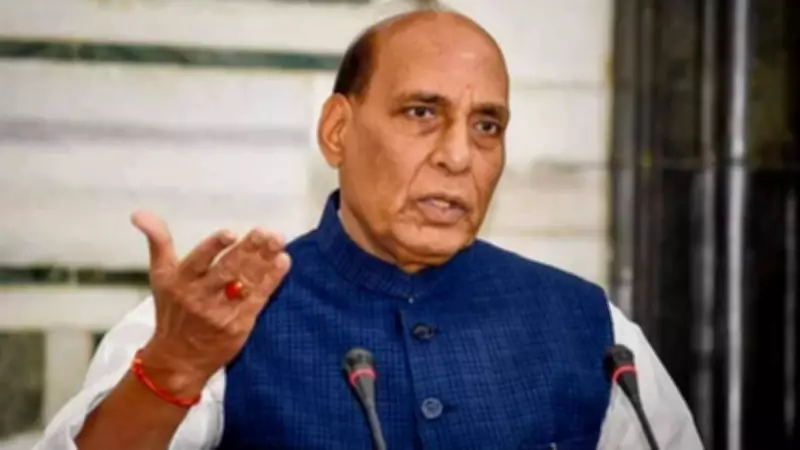
Defence Minister Rajnath Singh on Saturday firmly denied that any proposal is under consideration to impose a mandatory 20-year cooling-off period for senior military officers before they can publish memoirs or books after retirement. During an interaction with journalists, the minister dismissed media speculation about such a cooling-off period proposal, stating emphatically, “No such proposal came up for discussion before the Cabinet.”
Significance in Light of Recent Controversy
This statement holds significant weight amid the recent controversy that erupted over former Army chief General MM Naravane's unpublished book, ‘Four Stars of Destiny’, which details the Ladakh standoff with China. The book sparked a war of words between Congress leader Rahul Gandhi and BJP MPs in the Lok Sabha, highlighting tensions over military disclosures.
Currently, existing rules and regulations restrict senior military officials from revealing classified information even after retirement. Such disclosures are subject to stringent regulations under the Official Secrets Act, with prior government clearance required for any publication. The minister's clarification aims to address concerns about potential overreach in controlling post-retirement expressions.

Rafale Deal Progress and Timeline
In addition to addressing the memoir issue, Rajnath Singh announced that the government will make all efforts to seal the Rafale deal with France within the next 4-6 months. Speaking about his recent meeting with French counterpart Catherine Vautrin in Bengaluru, the minister said in a lighter vein, “I want the deal tomorrow itself. In fact, my IAF chief also wants it early.”
However, he acknowledged that the deal will take some time, adding, “We will try to close the deal in 4 or 6 months, including the clearance from the Cabinet Committee on Security (CCS).” Defence Secretary Rajesh Kumar Singh, who accompanied the minister, noted that final cost negotiations with France for the 114 Rafale jets are still ongoing and will require additional time to conclude.
Other Defence Developments and Clarifications
When questioned about whether the defence ministry has shown interest in Russia's offer to sell the stealth fifth-generation fighter jet Su-57 to India, Rajnath Singh responded cautiously, stating, “Can’t say anything now. Let’s see.” This indicates that no immediate decisions have been made regarding potential acquisitions from Russia.
The minister also provided updates on domestic defence projects, revealing that the aero engine programme for the Indian Air Force's Advanced Medium Combat Aircraft (AMCA) is progressing rapidly. India is co-developing a new 120-140 kN thrust jet engine with France's Safran to power the AMCA Mark-2. This high-thrust engine, designed with 100% technology transfer, is expected to enable superior stealth and supercruise capabilities for India's fifth-generation fighter. Early AMCA prototypes will utilize American GE F414 engines as an interim solution.
Overall, Rajnath Singh's statements underscore the government's commitment to balancing transparency in military affairs with strategic defence advancements, while actively pursuing key international deals like the Rafale acquisition.