

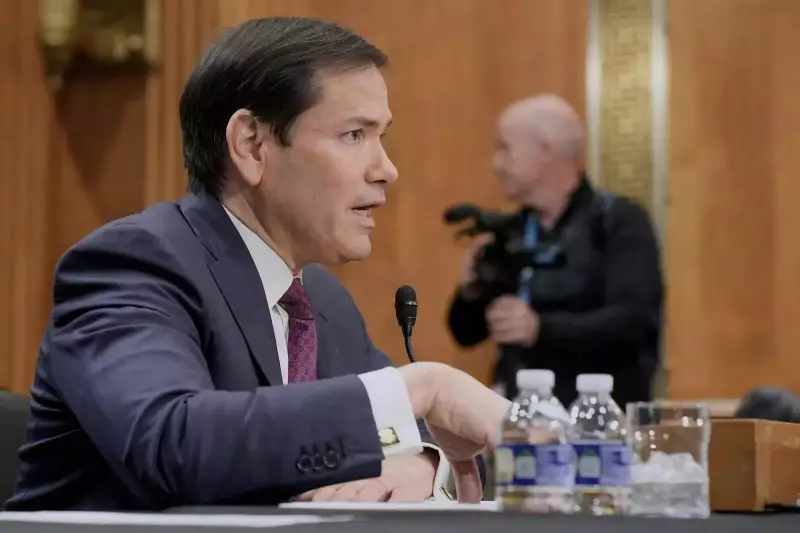
US Secretary of State Marco Rubio appeared before the Senate Foreign Relations Committee on Wednesday, delivering a comprehensive defense of the Trump administration's recent foreign policy maneuvers while outlining Washington's strategic posture on several critical international fronts.
Defending Venezuela Operations and Ruling Out Further Military Action
Rubio addressed the controversial US operation to capture Venezuelan leader Nicolas Maduro, asserting that it did not constitute an act of war. He emphasized that Washington has no plans for additional military interventions in the South American nation. "We are not postured and do not expect to take military action," Rubio told lawmakers during the hearing.
He elaborated that further strikes could potentially undermine long-term efforts to stabilize Venezuela and support a peaceful democratic transition. This clarification comes amid heightened tensions in the region following the recent military engagement.

Iran Posture: No Current Attack Plans Despite Military Buildup
The Secretary of State also provided insights into US policy toward Iran, stating there is no current plan to attack the country. This declaration comes even as the United States continues to increase its military presence across the Middle East region.
Rubio described this military buildup as "wise and prudent" – necessary measures designed specifically to protect American personnel and facilities from potential Iranian threats. His comments coincided with President Donald Trump's renewed warning to Tehran about facing "far worse" consequences if it refuses to abandon its nuclear ambitions.
Complexities of Regime Change in Iran Versus Venezuela
Rubio offered a nuanced comparison between potential regime changes in Venezuela and Iran, cautioning that altering Iran's leadership would prove "far more complex" than similar efforts in Venezuela. He pointed to the longevity and entrenched nature of Iran's ruling establishment as significant factors requiring careful diplomatic consideration.
Additional Foreign Policy Challenges: Ukraine and Cuba
The hearing also covered other pressing international issues, including the ongoing conflict in Ukraine. Rubio identified territorial disagreements as a primary obstacle in negotiations involving the United States, Russia, and Ukraine. He suggested Washington might need to provide a "security backstop" for any future agreement reached between the parties.
Regarding Cuba, Rubio expressed the Trump administration's desire to see governmental change on the island but stopped short of committing to forceful intervention. "We would like to see that regime change," Rubio stated, adding, "That doesn't mean that we're going to make a change, but we would love to see it change."
The Secretary of State's testimony provided rare public insight into the administration's strategic thinking across multiple global hotspots, balancing military readiness with diplomatic restraint while acknowledging the varying complexities of each international challenge.






