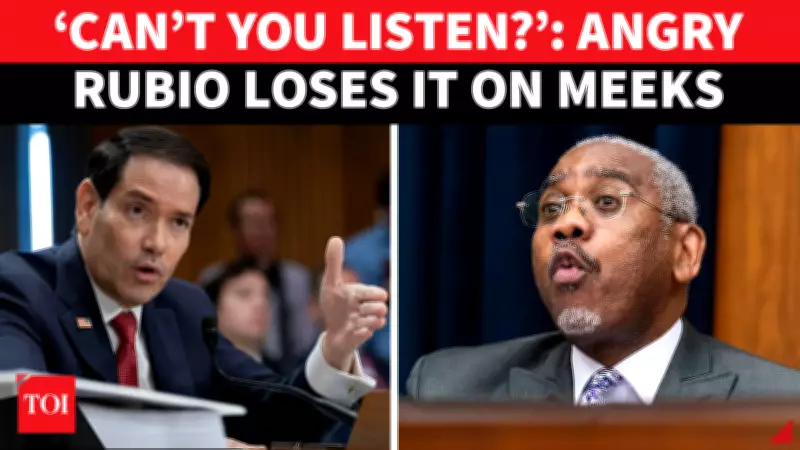
A fiery Capitol Hill showdown erupted as Representative Gregory Meeks and Secretary of State Marco Rubio clashed over the Trump administration's foreign policy agenda. Meeks accused the administration of weakening diplomacy, cutting foreign aid, damaging alliances, and escalating global tensions, including with Iran. Rubio pushed back forcefully, defending the administration's record and highlighting diplomatic breakthroughs, conflict de-escalation efforts, and new international partnerships.
The heated exchange began when Meeks questioned the administration's approach to foreign relations. He argued that the United States was losing its credibility on the world stage due to abrupt policy shifts and reduced engagement with traditional allies. Meeks specifically pointed to cuts in foreign aid as a move that undermines American influence and fosters instability in key regions.
Rubio, however, countered each point with vigor. He emphasized that the administration had achieved significant diplomatic successes, including brokering ceasefires in conflict zones and forging new trade agreements. 'Will you let me answer?' Rubio interjected at one point, as he dared Meeks to acknowledge the administration's accomplishments. The Secretary of State accused his critics of ignoring progress and focusing solely on negative narratives.

Key Points of Contention
The clash highlighted deep divisions over foreign policy priorities. Meeks argued that withdrawing from international agreements and reducing diplomatic presence had emboldened adversaries like Iran. In contrast, Rubio maintained that the administration's 'America First' approach had forced other nations to shoulder more responsibility for global security.
Diplomatic Breakthroughs Defended
Rubio cited recent de-escalation in the Gulf region and expanded partnerships in the Indo-Pacific as evidence of successful diplomacy. He also noted that the administration had maintained open channels with adversaries when necessary, contrary to claims of isolationism.
The exchange underscores the ongoing debate in Washington over the direction of U.S. foreign policy. As the administration continues to push its agenda, lawmakers remain sharply divided on the effectiveness of its strategies.