

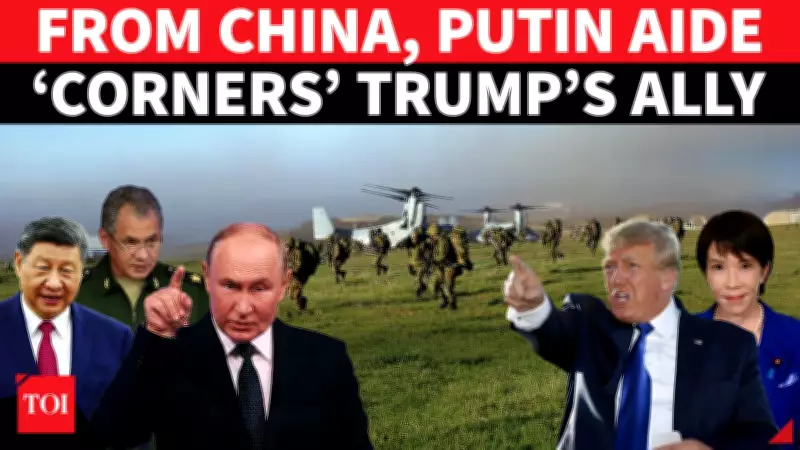
Russia's Security Chief Reaffirms Support for China's Taiwan Claim, Issues Warning to Japan
In a significant diplomatic development, Russia is positioning itself more firmly within Asia's most contentious geopolitical fault lines. During high-level talks with China's foreign minister, Russian Security Council Secretary Sergey Shoigu explicitly reaffirmed Moscow's complete backing of Beijing's territorial claim over Taiwan. This strong statement of support comes at a time of escalating military activity around the Taiwan Strait and increasing regional tensions.
Pointed Warning About Japan's Military Posture
Alongside the affirmation of support for China's position on Taiwan, Shoigu issued a direct warning concerning Japan's rapidly expanding military capabilities. The Russian security chief characterized Japan's defense buildup and Western military involvement in the region as destabilizing factors that threaten regional security. This criticism coincides with Tokyo's recent unveiling of a record-breaking defense budget, signaling Japan's commitment to strengthening its military posture in response to perceived threats.
Diverging Perspectives on Regional Security
The contrasting viewpoints between Moscow and Tokyo highlight the deepening divide in how regional security is perceived. While Russia frames Japan's military expansion and Western engagement as provocative actions that undermine stability, Japan maintains that its defense measures are purely reactive and defensive in nature. Japanese officials have consistently argued that their military modernization represents a necessary response to growing security challenges in the Indo-Pacific region.

Strategic Alignment Between Moscow and Beijing
This diplomatic exchange underscores the continuing strategic alignment between Russia and China, two major powers that are increasingly coordinating their positions on critical international issues. As Moscow and Beijing tighten their partnership, diplomatic language appears to be giving way to more explicit security doctrine, raising the stakes across the Indo-Pacific theater. The growing coordination between these nations represents a significant shift in the regional balance of power.
Broader Implications for Indo-Pacific Stability
The convergence of these developments creates a complex security landscape with far-reaching implications. The combination of heightened military activity around Taiwan, Japan's defense expansion, and the strengthening Russia-China partnership suggests that traditional diplomatic channels may be insufficient to address emerging tensions. As major powers articulate clearer security doctrines and red lines, the potential for miscalculation and escalation increases across one of the world's most strategically important regions.






