

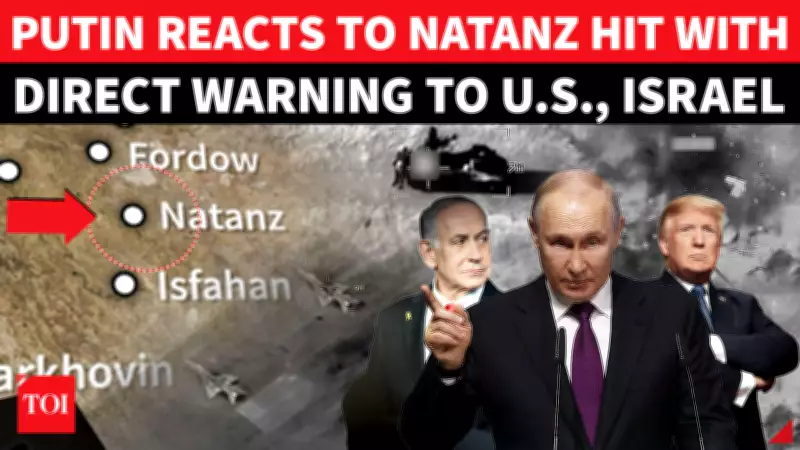
Russia Issues Stern Warning Over US-Israel Attack on Iran's Natanz Nuclear Site
Russia has erupted in condemnation following the coordinated US-Israel military strike on Iran's Natanz uranium enrichment facility on March 21, 2026. The Russian foreign ministry has slammed the operation as a "blatant violation of international law" and issued a stark warning that such actions risk triggering a catastrophic disaster across the Middle East region.
Escalating Tensions in the Nuclear Standoff
The attack on the heavily fortified Natanz facility represents a significant escalation in the ongoing geopolitical confrontation surrounding Iran's nuclear program. While Iranian authorities have confirmed that there was no radiation leak from the strike, the physical damage to critical infrastructure has raised serious concerns about potential environmental hazards and the destabilization of regional security frameworks.
Russian officials emphasized that unilateral military actions of this nature fundamentally undermine established diplomatic protocols and international agreements governing nuclear non-proliferation. The ministry's statement highlighted growing fears that such provocations could spiral into broader military conflicts with unpredictable consequences for global stability.

Broader Implications for Middle East Security
The Natanz facility has long been a focal point in international debates about Iran's nuclear capabilities and intentions. This direct military intervention marks a dramatic shift from previous diplomatic and economic pressure tactics employed by Western nations.
The Russian response underscores Moscow's strategic alignment with Tehran and its commitment to challenging what it perceives as Western overreach in the region. Analysts suggest this incident may further complicate already strained relations between Russia and Western powers, particularly regarding Middle East policy coordination.
Key developments following the attack include:
- Intensified diplomatic activity at the United Nations regarding the legality of the strike
- Increased military preparedness among regional actors
- Growing concerns about retaliatory measures from Iran and its allies
- Potential impacts on global energy markets and nuclear non-proliferation efforts
Regional Reactions and Future Uncertainties
While Russia has taken the lead in formally condemning the operation, other nations are carefully monitoring the situation's evolution. The absence of radiation contamination provides temporary relief, but the precedent of direct attacks on nuclear facilities establishes dangerous new norms in international conflict resolution.
The incident occurs against a backdrop of escalating rhetoric and military posturing throughout the Middle East, with multiple flashpoints threatening to converge into larger confrontations. How Iran chooses to respond—whether through diplomatic channels, proxy actions, or direct retaliation—will significantly influence the region's security landscape in coming weeks.
International observers are particularly concerned about the potential for miscalculation or unintended escalation, as the attack on Natanz has introduced new variables into an already volatile geopolitical equation. The Russian warning serves as a sobering reminder of how quickly localized conflicts can expand when nuclear facilities become military targets.






