Russia has issued a sharp diplomatic rebuke to the United States following the reported seizure of an oil tanker. Moscow has firmly stated that no country possesses the right to employ force against vessels that are properly registered and operating in accordance with international law.
Moscow's Strong Condemnation of US Actions
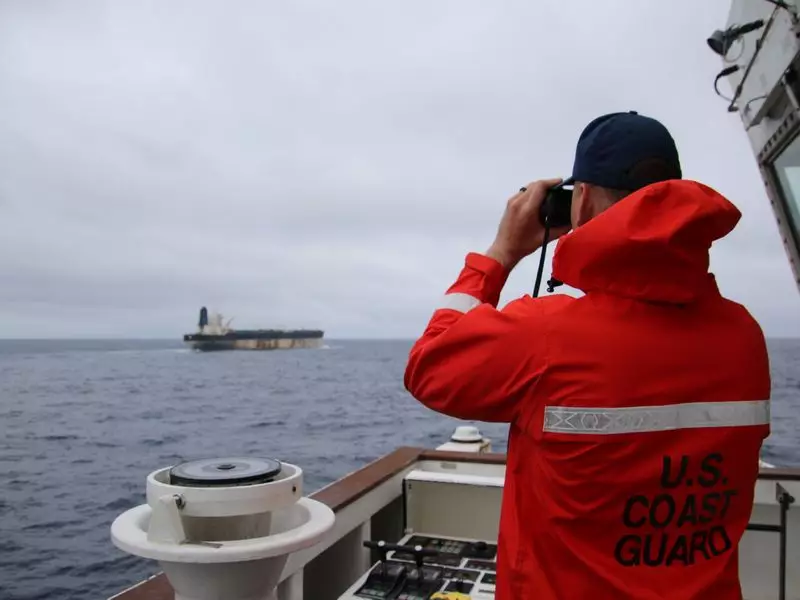
The Russian Foreign Ministry publicly addressed the incident, which involved the tanker Advantage Sweet. According to reports, the vessel was seized by American authorities. While the Russian statement did not explicitly confirm the tanker's ownership, it strongly defended the principle of freedom of navigation and the inviolability of commercial shipping.
In an official comment, the ministry declared, "No state has the right to use force against vessels duly registered under the jurisdiction of another state." This statement underscores Moscow's position that the US action constitutes a violation of established maritime legal norms. The ministry emphasized that such operations must only be conducted with the explicit permission of the flag state under whose laws the ship is registered.

The Incident and Conflicting Reports
The controversy centers on the oil tanker Advantage Sweet. International reports, cited by Russian media, indicate that the vessel was seized by the United States. The tanker was reportedly carrying a cargo of Iranian oil at the time of the incident. The US has long enforced stringent sanctions against Iranian oil exports, and seizures of tankers suspected of violating these sanctions have occurred in the past.
However, the situation is marked by conflicting narratives. While Russian state media reported the seizure, some international maritime tracking data suggested the tanker may have been involved in a separate distress situation. Despite these alternate reports, the Russian government has chosen to frame the event as a deliberate act of force by Washington against a lawfully operating vessel.
Broader Implications and Moscow's Warning
This incident is not being viewed in isolation by Moscow. The Russian Foreign Ministry connected it to a broader pattern of American behavior on the high seas. The statement accused the US of systematically violating international law and attempting to supplant it with a rules-based order dictated by Washington and its allies.
The ministry's warning was unequivocal: "Such illegal actions pose a serious threat to global maritime security and the stability of the global economy." Furthermore, Moscow made it clear that it reserves the right to take necessary measures to protect its national interests and the lawful economic activities of its entities. This language hints at potential diplomatic or other responses, though specifics were not detailed.
The seizure and the subsequent diplomatic row highlight the escalating tensions between Russia and the West, with economic warfare, including sanctions and counter-sanctions, increasingly playing out in global trade corridors. The assertion of maritime rights and the interception of energy shipments have become a new frontline in this ongoing geopolitical struggle.